The Efficiency Trap
What kids lose when we value efficiency over curiosity

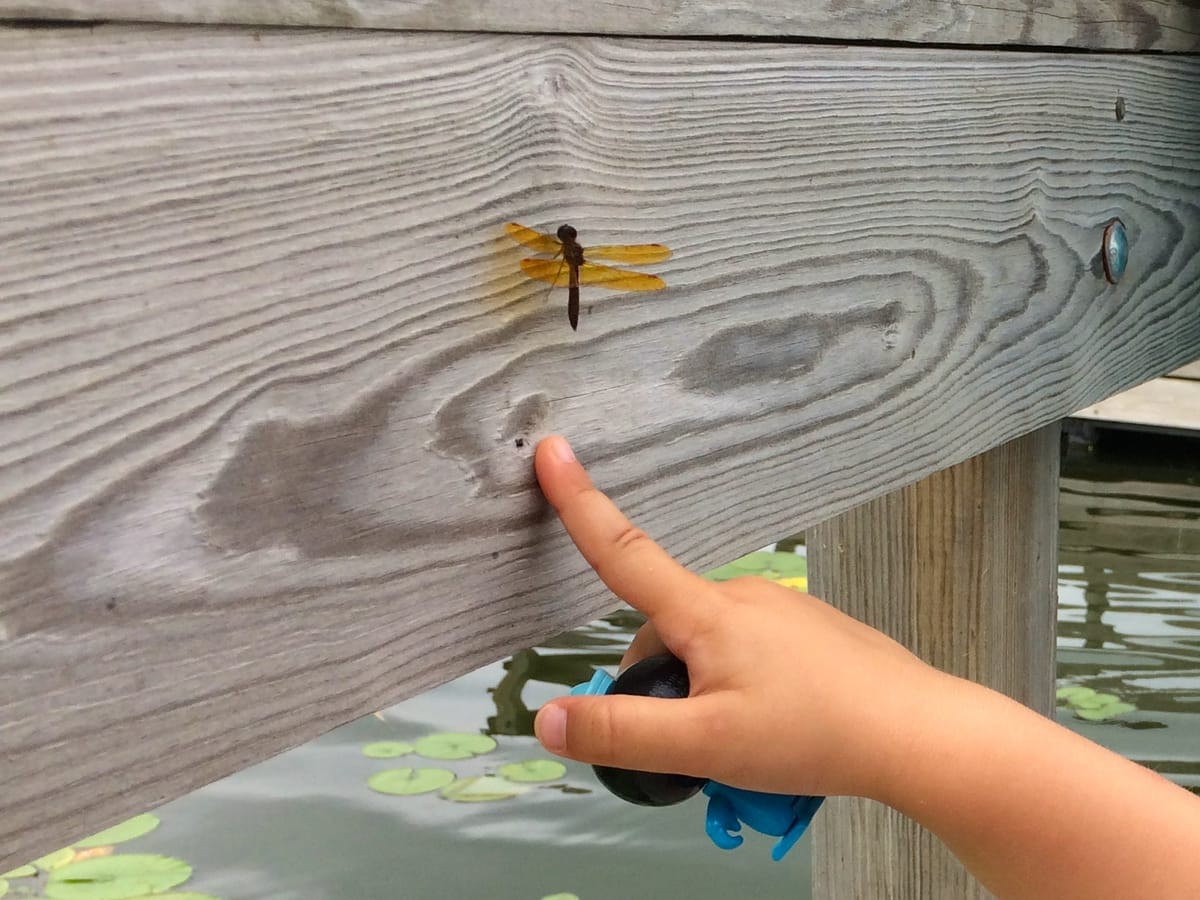
“Show them the joy of tasting
tomatoes, apples and pears.
Show them how to cry
when pets and people die.
Show them the infinite pleasure
in the touch of a hand.
And make the ordinary come alive for them.
The extraordinary will take care of itself.”
~William Martin
When I first started teaching, I worked in a two’s classroom for several years. Two-year-olds are still probably my favorite age group, despite the reputation of two as a harrowing tornado of a year. I find this most toddler of toddler phases to be fascinating and bewitching. Even in the moments when children this age do feel like little whirlwinds of emotion and defiance, it’s usually because the transformation their brains are experiencing is so intense and wondrous. Two-year-olds are constantly figuring out how to manage new abilities and understandings, while simultaneously trying to gauge how much power and control these new-found capacities unlock for them. As I often remind parents of two's and teens, gaining new levels of independence so rapidly is exciting but it’s also usually at least a little unnerving, especially when you still feel like one small person in a very big world. All things considered, the tantrums that two-year-olds are known for are pretty relatable when you think about how wildly in flux their relationship to the world is.
So much change can lead to erratic, unpredictable behavior, certainly. But it is also why this is such an exciting period in a child's life to bear witness to. It is a year full of genuine wonder, insistent curiosity, and unfiltered, utterly sincere emotions. Sometimes this takes the shape of kicking and screaming despondency. But this age also offers a uniquely transparent window into how the human mind learns and loves, and a vivid reminder of what awe and inquisitiveness look like in their purest forms.
The feeling you might have, as an adult, when you see the photos coming back from Artemis II, as it journeys around the moon, or from the the Webb telescope of crystal clear interstellar formations—that’s how two-year-olds experience almost everything around them all the time from pumpkin seeds, to snowflakes, to a line of marching ants. Imagine feeling that level of fascination in nearly every moment of the day. This is the view of the world that you get to share when you spend time looking through a two-year-old's eyes.
The teacher I worked with when I taught two-year-olds was the most wonderful, veteran teacher imaginable—the kind of teacher parents hand their children over to with complete trust and gratitude. She exuded warmth and steadiness amidst this very unsteady age group and the equally unsteady phase of parenting it often provokes. I learned so much from her. I learned how to recognize and seize the one moment when it might be possible to wash out the paint cups without havoc breaking out behind you. I learned how to soothe children’s tears upon separating from their most trusted grown-ups, by showing them respect, empathy, and care, instead of distraction and gimmicks. And I learned that our most important understandings almost always take root when we slow down and meet children in their curiosity, rather than constantly rushing them forward.
Anyone who has ever tried to get somewhere with a toddler, while that toddler was not strapped into a stroller, a carseat, or a backpack, knows exactly how painstaking this slowing down can feel. As adults, our attention is usually fixed on some goal up ahead, and we’re eager to get there as quickly as possible. But a young child's attention is generally focused on, well, everything everywhere, because everything is fascinating when so much of the world is still brand new. The psychologist, Alison Gopnik, refers to this as the “lantern” of young children’s attention, in contrast to the “spotlight” of an adult mind.
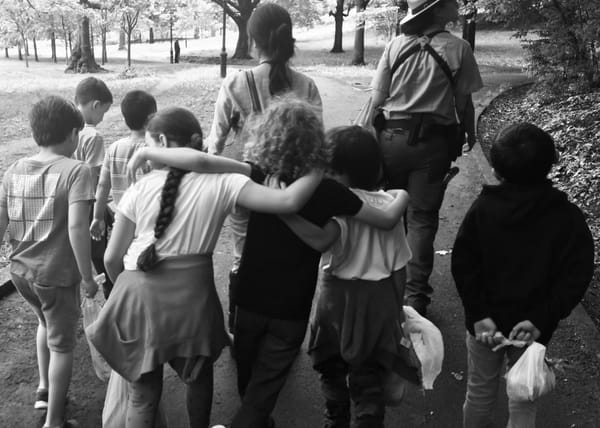
Traveling with a group of multiple toddlers exponentially increases this sense of moving through molasses. Not only do their small bodies make walking quickly a genuine impossibility, but their contagious curiosity, multiplied by the number of children, leads to a million moments of pausing, questioning, looking, wondering, and investigating. The walk from the classroom to the playground could take as long as the time spent in either place. And, as we trudged along and stopped and started with each child’s observation or untied shoe, Helen would always calmly say, “There’s no reason to hurry when you’re two.” I’m sure she said this mainly as a verbal reminder to the two of us that, as tempting as it might feel, there was no benefit in trying to speed the journey along—by contrast, all the benefit was in allowing their questions and observations to set our pace. But, in retrospect, I also think this mantra must have been powerful for children to hear, too. Children are much more accustomed to being rushed than to having their interests and ideas taken seriously and their questions given the time to unfold. What a surprising relief it must have been to have their inquisitiveness valued and validated aloud in this way.
I offer this memory with a great deal of empathy for parents, who are overburdened by obligations and chronically unsupported in meeting all those obligations. Most of us feel the unrelenting weight of all our responsibilities as an ever-present compulsion to rush. We might love nothing more than to be able to pause and slow down once in a while, led by the curiosity of our children rather than by all our lists and alerts. But the pressure and strain of grown-up life can make this feel incredibly difficult. I’ve been that stressed, harried parent. It’s hard. I get it.
I also know that, too often, teachers are made to feel the same way. The pressures of impending assessments and tests and of academic expectations that push down into younger and younger grade levels, leave teachers to juggle curriculum mandates and benchmarks that can be impossible to live up to without enforcing a lot of rushing. Even in the youngest classrooms, the push for outcomes can drive teachers to feel they have no choice but to forgo curiosity and investigation in exchange for skill lists and standards charts.
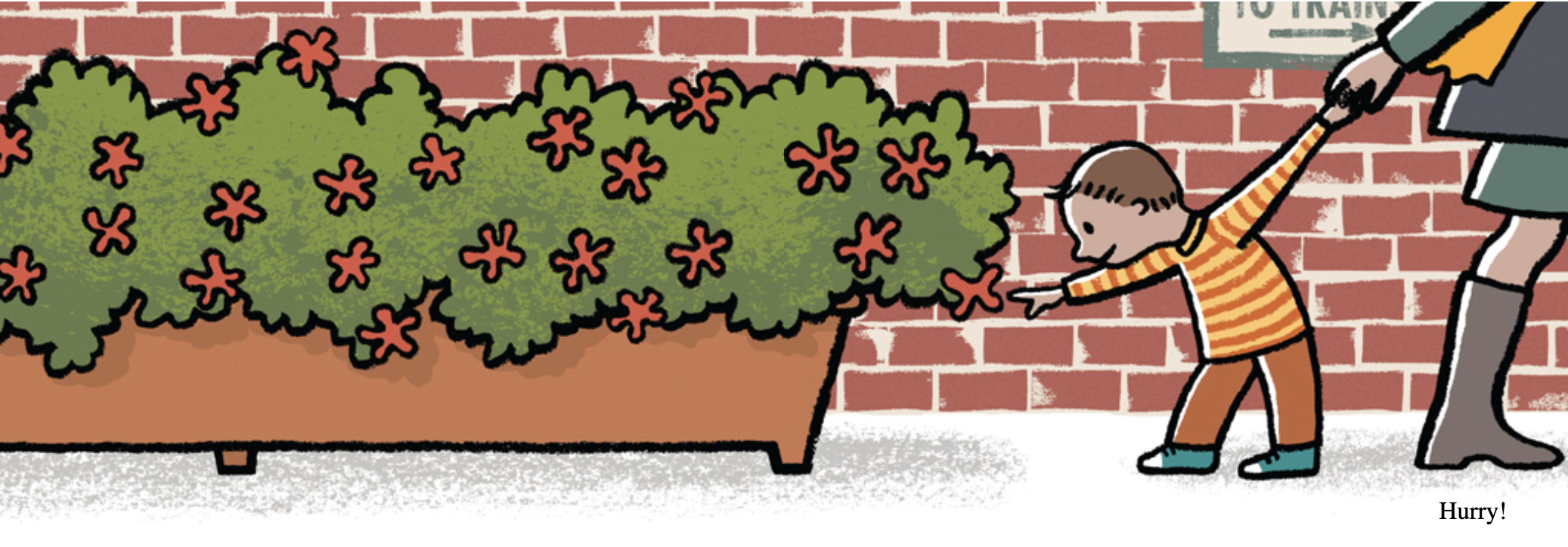
Of course, it’s okay to have a destination in mind. Our job, as parents and teachers, is to help children grow, and this does inevitably mean that at least part of our task is to encourage progress and forward momentum toward goals. And yet, when our urgency to reach an end-point becomes so all-consuming that we sacrifice opportunities for curiosity, connection, and exploration along the way, perhaps we are the ones who have lost track of the goals. And this isn’t only true for early childhood classrooms, where the trickle down effect of pressures on older grade levels inevitably pools. Efficiency easily morphs into the ultimate aim, in and of itself, at ever age level—not only a byproduct of our long lists, but the primary mark to aspire to for its own sake.
From teach-your-baby-to-read programs to AI-driven, two-hour schools, we are sold the idea that faster learning is inherently better learning—that eliminating all the friction and meandering exploration that slows kids (and the rest of us) down will somehow free their minds (and ours) for more worthy activities. But what exactly are those more worthy activities? Once we've declined all our distracting questions and checked all our boxes, will we even know what to do with the curiosities we've preserved, like pressed flowers, for some later reward? Or will we just make more lists of tasks to move briskly through, because that's the only way we've learned to assign value to time?
If you take a moment now to pause and think about your own most definitive recollections of learning—the lessons that hit you hard and changed the way you understood other concepts and ideas moving forward, and the lessons you’ve retained to this day—what kinds of environments, prompts, and challenges led to these transformative experiences in your own life? I wonder if you would categorize them as experiences in which your primary goal was efficiency or something else?
For most of us, I suspect these memories of transformative learning align more closely with the poet Wendell Berry’s description of encountering dissonance, than with efficiency. He writes,
“The mind that is not baffled is not employed.
The impeded stream is the one that sings.”
Friction, it turns out, isn’t the enemy of learning, it’s the provocation. The times when we feel stuck, when we are slowed or even halted in our progress by confusion and bafflement or by wonder and mystery, are the most critical opportunities for learning. It is cognitive dissonance and disequilibrium that lead to profound new understandings, and these experiences necessarily trip us up and slow us down. The obstacles we encounter, the ideas that don’t make sense or that fail to fit into our prior frameworks, these encounters with contradiction and enigma are critical speed bumps, not wasteful detours.
Our desire for efficiency in education often leads us to elide these interruptions, impatient for mental hacks that allow kids to skip over the slow parts of learning. In turn, we short circuit their most powerful opportunities. The Swiss developmental theorist, Jean Piaget, who is most known for parsing development into stages of thinking and processing, described this focus on efficiency in learning as “the American question.” He noted that, only when speaking to American audiences, did his explanation of learning provoke inquiry into how the stages might be accelerated. He felt that this fixation reflected both a fundamental misunderstanding of how learning works and of the value in mapping the way children think and grow.
There’s plenty to take issue with in Piaget’s theories, some of which are now nearly a century old. But at the core of his model is the notion that we learn when we encounter a conflict or a query that insists we pause and reassess seemingly incompatible prior ideas. This basic description of learning continues to hold up, and I suspect it mirrors the moments in your own learning life that you reflected on earlier. His observation of the particularly American obsession with smoothing these experiences of uncertainty and disconnect out, reducing the discomfort of feeling confused or stuck or unsure, and making education as speedy and transactional as possible, also remains strikingly relevant.
As always, I think early childhood classrooms hold valuable lessons for us all. I wonder if the wisdom of a two’s classroom might, in fact, echo through all our learning lives and through the educational experiences we shape for our children at every stage of school. What if we could benefit, at every age, from asking whether there is really a worthy reason to hurry—and whom our efficiency serves? That toddler mantra might have value far beyond the preschool walls. If only we could slow down long enough to consider it.
Wishing you the wisdom and confidence to slow down and the grace to trust in a child’s curious eye,
Alicia
A few things I found helpful and hopeful this week…
- Read Them Home: Reading to Stop Family Detention
- The machines are fine. I'm worried about us. by Minas Karamanis
- 'We call it the walking bus': How kids are getting to school amid ICE operations
- A Century After Vanishing, a Gentle Giant Returns: Rewilding European Bison
- Oldest known recording of a whale song could unlock mysteries of the ocean