Naming the Hard Things
How David Attenborough's most dire message created an unexpected window for hope

“ And I knew then
that I would have to live,
and go on living: what sorrow it was;
and still what sorrow ignites
but does not consume
my heart.”
~Jane Kenyon
When my son was seven or eight, while walking to school one morning, he commented in a surprisingly matter-of-fact tone that he thought it was humans who should be going extinct, instead of so many other species. His affect was pragmatic as he went on to explain that, while other animals do consume and sometimes cause harm, they generally only take what they need to survive, whereas humans are greedy and this causes all the problems. If humans disappeared, he posited, the rest of the world would be fine, but as long humans are around, we put everything else at risk. I didn’t try to refute his perspective or make any sort of counter argument. To do so would only have felt like offering platitudes under the weight of his assertion, and I’m sure he would have received any debate from me as a failure to listen. After all, he had a point.
One of the most transformative experiences of both teaching and parenting is the opportunity to step out of your own view and see the world through each individual child’s unique lens. If you understand growing up and learning as processes of co-creation, in which we are in an ongoing dialogue with children, rather than simply pouring information and skills into them, then our adult role always begins with listening and attempting to see the world as they do. Whether we are untangling a difficult emotional moment, leveraging a spark of curiosity, or working through a tricky concept, we will inevitably hit dead ends if we don’t begin by discerning what a child knows, feels, and believes.
As a teacher, working with the youngest children, this has often meant being able to see the classroom, on the first day of school, both through the eyes of the child who dashes in, ignited by the thrill of new people and new materials, as well as through the eyes of the child who views all this newness with uncertainty and trepidation. It has meant being able to see disputes and hurt feelings from both sides of an argument. And it has meant understanding that no learning experience will be equally engaging or compelling to every child in the room. A variety of entry points is the only way to captivate every mind.
As a parent, it has meant, among other things, learning to understand a mental journey that often begins with an emotional sensitivity that is familiar to me and ends with a desire to find solutions that is also familiar, but that takes a very different path between those points—one that is frequently more measured and more inclined toward cynicism than my own.
In this process of conscious perspective taking, whether in the classroom or at home, the most consistent lesson I’ve learned is that it is always critical to honestly acknowledge a child’s reality, as they experience it, not as we would like it to be. This doesn’t simply mean validating their emotions, as we are often scripted to do, but also naming the root of those feelings. “I see that you’re feeling sad” has never gotten me as far in building trust with a child new to school as, “I see that you’re feeling sad. It’s really hard to say goodbye.” “I see that you’re feeling mad” has never helped me resolve a conflict as effectively as, “I see that you’re feeling mad. It’s so hard to wait for a turn when you want something.” Being willing to name the full truth of a difficult moment places us in the same reality, and from there we can begin to chart a course forward. Distraction doesn’t accomplish that. We can only move toward a new destination once we’ve situated ourselves on the same map.
For my own little boy, who's no longer so little, but who declared that it would be better for the world if humans were extinct before he reached double-digit birthdays, situating ourselves on a shared map has always involved a willingness to name, rather than circumnavigate, hard truths. Surely, for him, this disposition is a result of both temperament and some early exposures to loss. But I also suspect that it’s not uncommon among his generation more broadly. After all, before he and his peers had even reached high school, they had already lived through a global pandemic, rising political unrest, skies turned thick and orange with wildfire smoke, and an uncountable number of active shooter drills. There are no rose-tinted glasses powerful enough to hide the starkest challenges we face from kids, who have already seen so much fear up close. A degree of cynicism is understandable.
Don’t make the mistake of thinking that this awareness of the brokenness of the world they are inheriting means that young people are apathetic or inactive. Many adults make this mistake, but there is plenty of evidence that young people are on the front lines of demanding a better world. However, I think they are likely doing so from an unusually stark and pragmatic vantage point—not from the idealism that we often associate with youth, but with eyes already forced wide open.

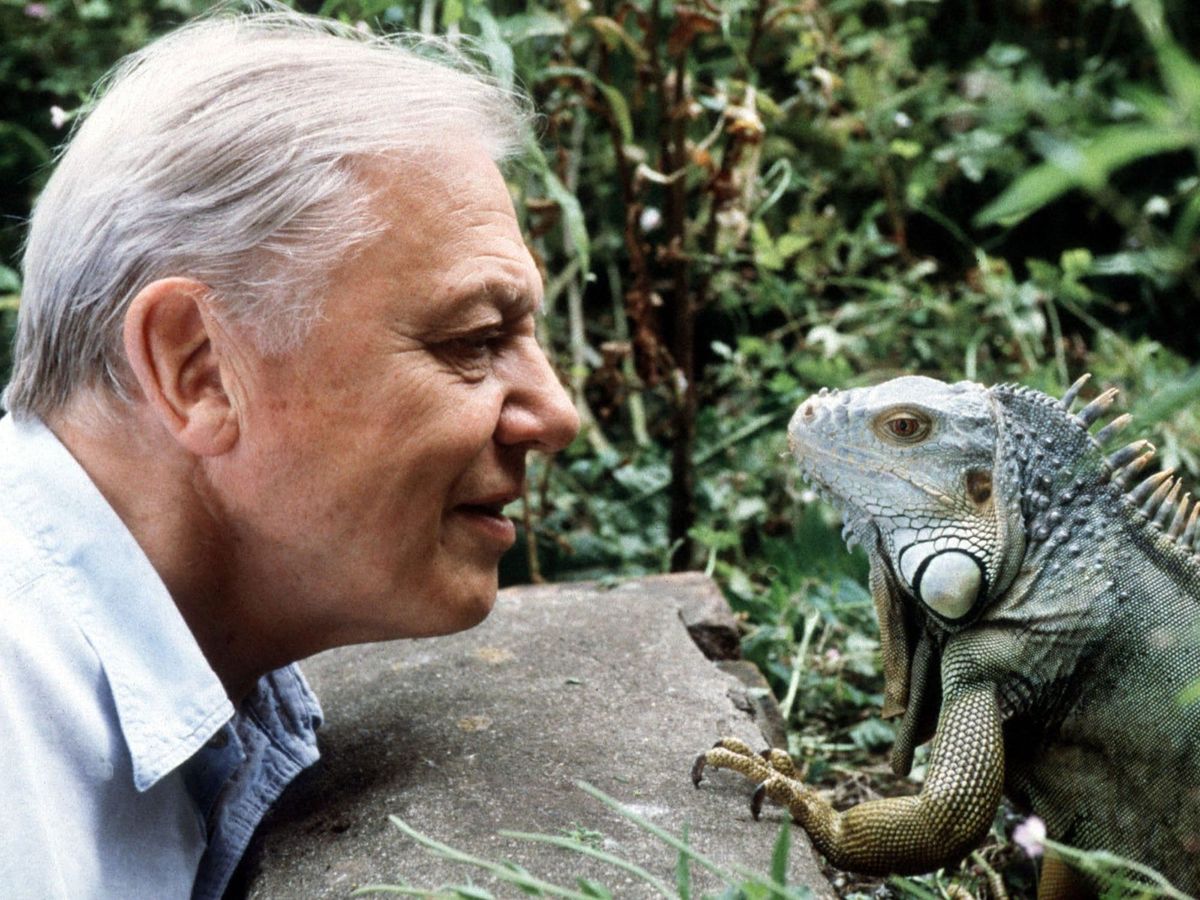
Given all of this, perhaps it is not surprising that one of the most clear-cut acknowledgements of hope I’ve ever heard my son make came on the heels of watching one of the most transparently dire films David Attenborough has made. Attenborough, who turned 100 earlier this month, has described his 2020 film, A Life on Our Planet, as his “witness statement.” Along with Extinction: The Facts, which was released almost simultaneously, the film feels like a startling departure from his usual focus on the wonder and beauty of the natural world. My son, who has always been a devoted animal lover, had seen and relished many of Attenborough’s previous films and series, but I think those earlier works often felt more like a vivid curriculum, or perhaps like a sort of virtual vacation, even when they incorporated a message about climate change, folded among beautiful vistas and fascinating creatures. This, by contrast, felt like testimony coupled with a very serious and urgent call to action.
A Life on Our Planet is grim. Much of the film moves between heartbreak and grave warning. It would be easy to be left with a sense of despair. This was amplified by the fact that it was released in the fall of 2020, as the pandemic wore on all our psyches and as the world seemed, in so many ways, to be palpably on the brink. And yet, my animal-loving, often cynical, then nine-year-old stood up at the end of this dark narrative and said, “Ok. David Attenborough made me feel a little more hopeful.”
Thinking about Attenborough's 100th birthday, I re-watched A Life on Our Planet last night. It is still difficult viewing—maybe even more so now that six more years have ticked toward its scariest predictions. It is also riveting and deeply moving. It’s definitely not for every nine-year-old. Though, as adults, responsible for doing our best to shape a habitable future for the next generation, we should probably all watch and sit with the lessons and calls to action it offers.
So, why did this dark portrait of our very uncertain future leave my fourth-grader feeling hope rather than gloom? I think it was, as perhaps it always is, because he felt that David Attenborough had told him the truth. And so, when the final third of the film begins to pivot and provides concrete examples, supported by evidence, for the resilience of nature, and of how we might actually find our way to a less dire future, the message landed with a sense of validity that can only be earned through honesty.
When navigating the line between truth and hope with kids, I often think about children’s author Kate DiCamillo’s reflections on Charlotte’s Web, which I quoted in my very first Notes on Hope message. As she considers the sad conclusion of E.B. White’s novel, alongside its enduring appeal to children, she says:
“I have tried for a long time to figure out how E.B. White did what he did, how he told the truth and made it bearable…the only answer I could come up with was love. E.B. White loved the world. And in loving the world, he told the truth about it – its sorrow, its heartbreak, its devastating beauty. He trusted his readers enough to tell them the truth, and with that truth came comfort and a feeling that we were not alone.”
I think this is what David Attenborough accomplished for my son in A Life on Our Planet. As heart wrenching as much of the film is, it is clear throughout that both his life’s work and the stark clarity of his message are rooted in a deep love for the planet and all the life it holds. I think this is, perhaps, also what my son was trying to express in his own assertion that the rest of the world would be better off without humans. I think it was fundamentally a love for animals and for the wild world they inhabit that had led him to such a seemingly sacrificial conclusion, not necessarily despair. After all, in despair, we might as well burn the fuse to the end, because there is no chance of something better. Love, though, sees possibility while also softening us to sacrifice on behalf of what we love. And hope that isn't mere optimism always requires something effortful of us.
The kernel of hope my son found in Attenborough’s message was, I think, that there might be sacrifices we could make that would be significant but that would not require giving up on humanity, and by extension on ourselves. Instead, there could be viable ways to bring humanity into better balance with the natural world, upon which we rely—into the kind of relationship with and commitment to nature that he had always intuitively felt, but that few of us act upon. It allowed him to see that, as the climate scientist Ayana Elizabeth Johnson often says, we already have many of the solutions we need, if only we can muster the will to activate them. But this window into hope was only accessible because Attenborough had first named, with sincerity and depth of feeling, the most difficult realities that my son, at nine, had already discerned.
Not every child craves this same level of truth. Again, communicating effectively with children always begins with close attention to their individual perspective, their personal understanding, and their temperament. But I do think we are living in a time when many children understand more about the challenges of the world they are living in—and of the world that they will live into—than we adults are often comfortable acknowledging. And, if we want them to feel less alone in their understanding, we will have to find it within ourselves to honestly name what they already know.
The hardest truths, lovingly told, can feel comforting in a way that platitudes never can, because, when we are trusted with the truth, we understand that we share the same reality, and there is relief in that, especially when the reality is frightening. And there is even more comfort in realizing that, because we share the same reality, we can hold the weight of it and work toward something better together.
Wishing you the compassion to listen closely, the courage to hold what you hear with honesty, and the love to move forward together,
Alicia
A few things I found helpful and hopeful this week…
- Paris is creating mini-parks in front of schools, and the benefits are bigger and more multi-dimensional than you might expect. Other cities could do this!
- Teens aren’t as disengaged as you may think: What adults get wrong about adolescents’ civic contributions
- Mothers are the most underestimated force for change
- Shanghai is on path to becoming zero-waste city
- Swift Fox Revival: Conservation Wins Restore Prairie Guardians