The Blueberry Dilemma
Finding connection and care in small pleasures and avoiding becoming numb

“Most days, I’m dumbstruck
by what humanity is capable of:
every miracle and massacre.
For every bullet, a redwood.
For every salted grief, a new joy
is born. It is a soft discipline,
trying to love this world—
even when it breaks your heart.
Even when it breaks.”
~Kelly Grace Thomas
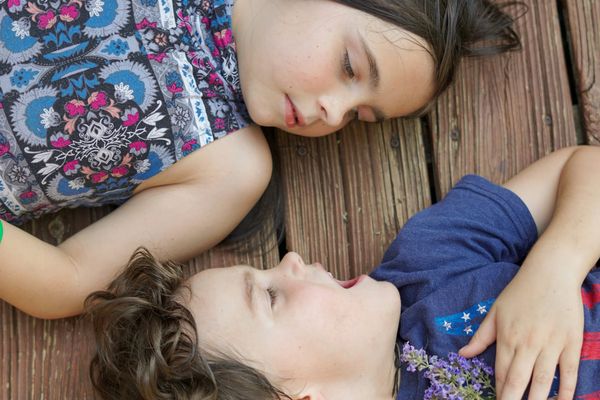
When a young child feels they have something pressing to say, they will sometimes cup your face in both of their small hands and physically turn your focus toward them. It is easy to interpret these little gestures among children as evidence of their egocentrism—the feeling that their idea or need must be the most significant in any given moment. But, as a teacher and a parent, this is never quite how it felt to me when a child brought my attention to them in this very direct way. When a child physically guided my gaze to meet their own, it was a reminder of how important intimate, personal connection is to human engagement and how early and deeply we know this. Even the youngest children understand intuitively, despite growing up in a world of multitasking and digital distraction, the power of bringing our eyes to meet their own.
These little gestures of redirection can also be reminders of the extent to which children live in the present. They are creatures of the now—of consuming curiosity and of ideas and needs that often strike like lightning and can disappear just as quickly to make room for the next new bit of knowledge. And so they turn our faces toward their own to say: here, now, us together, attend to this moment with me before it passes.
I’ve talked with many teachers over the years about the gift of doing a job that keeps you powerfully anchored to the present. No matter what else may be troubling your grown-up mind, on a personal level or in the world more broadly, it’s nearly impossible to dwell on ruminations while surrounded by young children. When the world feels especially heavy, this can be a particularly significant gift, not of distraction exactly but rather of a shift in perspective—a redirection of our grown-up gaze away from the losses of the past or the anxiety of what’s to come toward the vibrancy of the now, where the exuberance of shared delight carries as much weight as any frustration or fear, and where there is always an assumption that together is better than alone.

Over the past several weeks, the question of how we ought to relate to the small pleasures and delights of our daily lives, when the world around us feels so treacherous, has surfaced repeatedly. How can we possibly know how to process our most ordinary joys—a child's laughter, a dog's soft eyes, the relief of a warm spring day—appropriately in the context of the extraordinary sorrows that seem to lurk in each violent headline?
Surely, the ubiquity of this question is an indicator of how overwhelmingly precarious the world feels right now. It can seem frivolous or even complicit to engage in anything light and easy and good when fear and uncertainty are so palpable. It is hard to know where our responsibility starts and ends when suffering feels so omnipresent and our personal reach is often so limited by comparison. All our small acts of care do matter, but when our actions feel like pebbles tossed into a stormy ocean, it's understandable to question the moral weight of each moment.
The climate lawyer, Aaron Rugenberg, recently reflected on this question, as he recalled learning about the destruction of the girls’ elementary school in Minab, Iran, while he was on a hike through the woods with his own young children. He says:
“Obviously there’s a responsibility to do what we can to oppose the vile acts of our state—to vote against our current government, to protest its war, to work to hold our leaders accountable. But what about in between the moments when we can take useful action? My immediate question—standing there in the woods, caught between the nightmarish fact of those murdered children and the reality of my own kids getting farther and farther up the trail ahead—was how can one justify living a full and happy life in such a morally intolerable context?”
I’ve written before about the importance of remaining connected to experiences of shared pleasure, especially when suffering and cruelty abound—the way in which shared joy can actually prompt deeper care and solidarity. These experiences, however small, can help to light a path toward a world in which joy is more readily accessible to everyone and fear is less oppressive. Anything that keeps our hearts soft and open makes despair and cynicism less viable and tethers us more firmly to the possibility of a better world, one in which there is more shared laughter and less preventable pain. Moments of pleasure and lightness are also important for the simple reason that we sometimes need to be able to take a breath and regain our footing and our energy, in order to maintain the stamina to keep fighting for each other.
However, alongside the value of these moments of joy in orienting our compass toward a gentler, more caring world, there is also a divergent path in which our own experiences of pleasure lock us into protecting what we perceive to be ours and fear losing, shutting down compassion rather than serving as a reminder of the shared goodness we could all have a stake in. I think this is the quandary Rugenberg is tugging at, and it is a question worth shaping into a habit of self-interrogation. If our experiences of even the most mundane joys help us to look away from others’ suffering or to become numb to lives lived beyond the reach of our own pleasure, then joy can morph into something colder and sharper. Surely we should guard against this possibility with all we have.
Moments of joy can be connective and expansive, creating little glimmers of the many cares we have in common and sparking a desire to protect delight for one another, no matter how far apart or divergent our lives may be. Alternatively, though, pleasure can be isolating and insulating, leading us to hoard our own happiness, constantly on the lookout for those who might make off with it for themselves, defensively justifying our individualism and indifference, or using our own contentment as a shield to deflect the penetration of others' sorrows.
As the novelist, Michael Chabon, has written of living amidst the shards of a broken world, we have several choices in deciding how to navigate among all the sharp edges. He says:
“Everyone, sooner or later, gets a thorough schooling in brokenness. The question becomes: What to do with the pieces? Some people hunker down atop the local pile of ruins and make do, Bedouin tending their goats in the shade of shattered giants. Others set about breaking what remains of the world into bits ever smaller and more jagged, kicking through the rubble like kids running through piles of leaves. And some people, passing among the scattered pieces of that great overturned jigsaw puzzle, start to pick up a piece here, a piece there, with a vague yet irresistible notion that perhaps something might be done about putting the thing back together again.”
So, what are the habits of mind, heart, and pragmatic action that make it most likely we will be among the third group—those who are able to acknowledge the sharpness of the broken pieces and work toward repair, rather than self-protection or greater brokenness. In a way, this is the central question that I started writing Notes on Hope to try to answer. Joy, even in the smallest slivers, and especially when it is shared, must be part of the answer. We can only work to repair harm if we can begin to imagine what wholeness might look like for everyone. The starting point for that imagination lies in recognizing the traces of joy and beauty and connection in our own experience—the little flashes of color that glimmer and shine and fill us with purpose, even among all the jagged shards.
But questioning the function and value of our own joys and pleasures also seems essential and brave. This questioning ensures we don’t lose sight of the brokenness as we admire the glimmers. It is in this interrogation that we remind ourselves not to simply protect our own little bits and pieces of goodness, but also to consider how we might expand these experiences, invite others in, and replicate them. The habit of questioning the function of pleasure also serves as a reminder not to become so immersed in all the little things that matter to our own, individual happiness that we begin to ignore the sharp edges that cut against others’ lives—turning away from the suffering that lingers in our peripheral vision by gazing only at our own small corner of the puzzle.
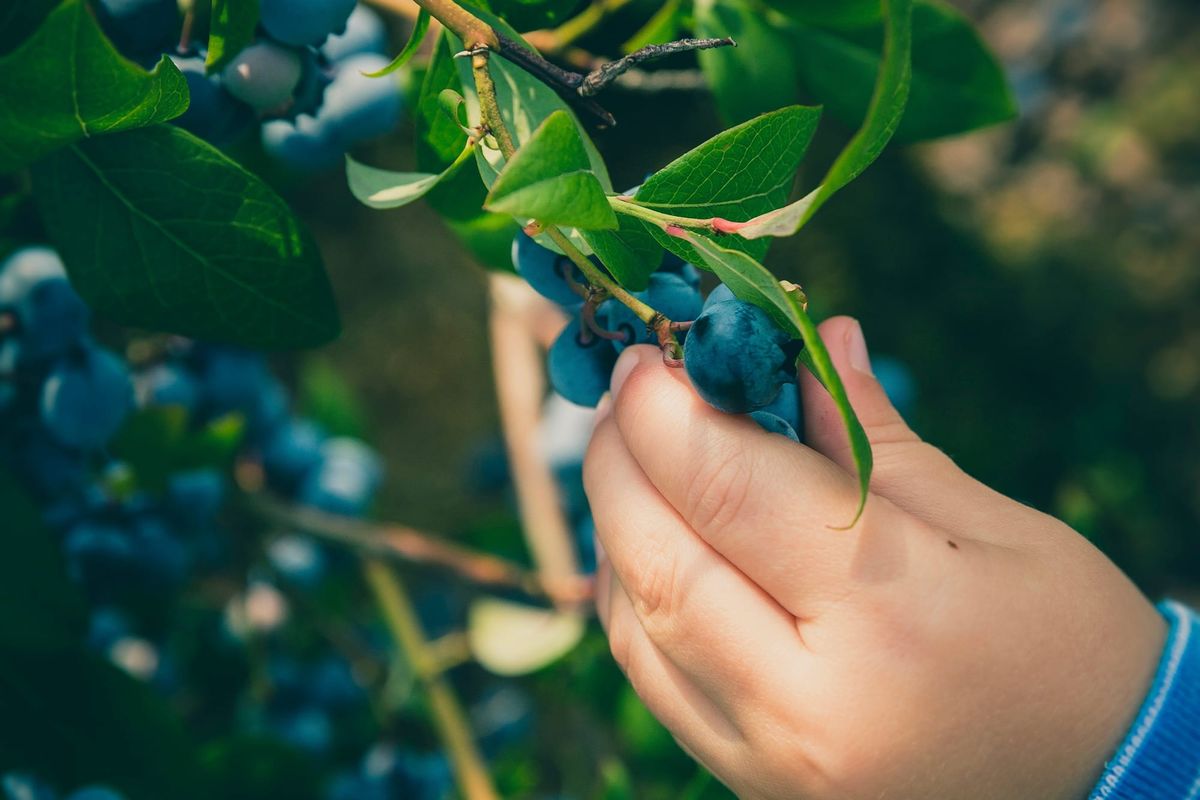
I’ve come to think of the habit of questioning the orientation of our pleasure, and our engagement with the present moment, as the blueberry dilemma, a reference to an album of photos documenting leisure time among the Nazi soldiers, who operated the Auschwitz concentration camp. In a series of photos in the album, a group of women, who were secretaries at the camp, can be seen laughing together while eating blueberries during their time off duty. The photos ask us to consider, with stark honesty, our human capacity to disengage from profound suffering, as we continue to participate in the otherwise normal aspects of daily life, including simple pleasures like eating blueberries and laughing with friends.
The mental ability to compartmentalize our responsibility toward others so thoroughly that we can not only participate in profound harm, but also continue with such lightness in daily life, is a startling reminder to examine our own potential for complicit indifference. The photos beg the uncomfortable question of how much knowledge of and direct implication in atrocity makes our pleasures unseemly or even cruel? At what point in our awareness of the horrors of other people’s lives do we move from the role of witness to bystander to perpetrator? And how does the meaning of the small pleasures of our own daily lives shift as we inch along this spectrum?
Our ability to recognize joy, delight, and goodness, even amidst fear and hardship, is central to our capacity to imagine and work toward building a world with less suffering and more care. At the same time, our willingness to question whether our own engagement with delight is helping to keep our hearts open to others, or is doing the opposite—perpetuating an illusion of normalcy—must be part of how we ensure we are not slipping into acceptance or collusion. The courage to ask ourselves this question is, I think, the only way to ensure our experiences of the small pleasures of daily life remain rooted in care and in deepening our sense of connection to others, instead of becoming a tool to abet in masking reality.
It is in the delicate relationship between pleasure, presence, and care that I find the image of a young child taking a grown-up face in their hands and insisting we share in their attention and in their fascinations a helpful metaphor. Children keep us focused on the present and on all the ordinary pleasures and frustrations of immediacy. But they also hold us in constant relationship with interdependence and care. And they tether us to possibility, as our awareness of their future beats beneath the surface of all our interactions. They remind us of all these values as they place their palms against our cheeks and bring our eyes to theirs, orienting our understanding of the small moments as opportunities for connection, compassion, learning, and hope, and as invitations to consider the possibility that these small moments are, perhaps, what we share most with others, no matter the differences in our lives or circumstances.
As Anjali Dayal, a researcher on human rights and international peace, recently observed, in response to a photo of a man fleeing Tehran on a bicycle with his small dog:
"I think often of a New York Times photo of a little Iraqi girl tending to her parakeets in a bombed house, probably from 20 years ago now. I will think of this man and his sweet dog often now too. People just want to love what they love, care for their little beings..."
We have to be willing to ask ourselves if even the smallest pleasures in our daily lives are functioning as catalysts for greater care and for building a future that is more filled with joy than with fear for everyone—or if our happiness is acting as an insulator, protecting our own hearts from the necessary pain of connecting with the joys and the accompanying sorrows of others' lives. In having the courage and compassion to ask this question, I think we can build a habit of gently redirecting our own gaze toward care and toward each other.
Wishing you the courage to ask difficult questions and to let joy soften your heart to the cares of others,
Alicia
A few things I found helpful and hopeful this week…
- Our Longing for Inconvenience by Hanif Abdurraqib
- Independent Bookstores Make a Quiet Comeback
- Pregnancy vaccine reduces baby hospital admissions for RSV by 80%
- Reenacting Normalcy is Wrecking Us by Kelly Hayes