The Imaginary Friends Would Like a Word
Some advice from preschool for those wondering if the robots are alive

“We dropped our troubles
into the lap of the storyteller
and they turned into someone else’s.”
~Naomi Shihab Nye
For a few years, after I graduated from college, I often babysat three brothers who attended an after school program where I worked at the time. The oldest was twelve and mostly did his own thing, as tweens will. But the two younger brothers, three and six, would spend hours engrossed in rambunctious imaginative play.
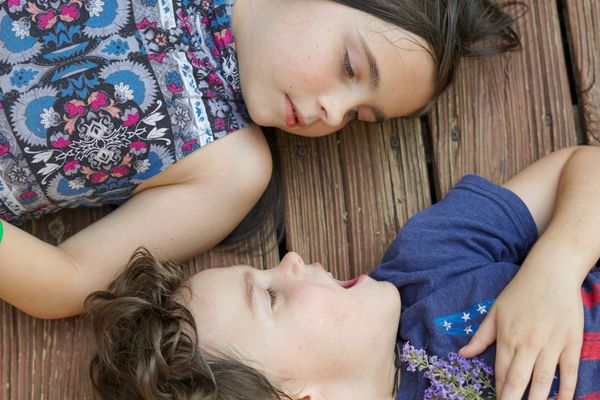
During an epic super hero duel one weekend afternoon, I remember both boys storming down the stairs. The six-year-old slid across the living room and gestured decisively back toward his brother, who promptly collapsed. Dramatic death scenes are a staple of young children’s play, and he had obviously been zapped by his big brother’s invisible force.
As the older of the two (the zapper) stood frozen on his side of the room, waiting for the next phase of their battle to begin, his younger brother—newer to the stage combat rules of pretend play—remained splayed out on the floor. After a few minutes, the six-year-old dropped his power pose, temporarily releasing his character to walk across the room. He stood over his little brother and said, “You’re not supposed to stay dead.” The younger one’s eyes popped open. His brother reached out a hand to pull him up. They looked at each other for a moment and then dashed off for another round.
Young children’s lives are consumed by imagination and story. The veil between real and pretend is far more permeable than it is for adults. They move between the two worlds fluidly, and they feel deeply in both realms. Any parent who has frantically searched for a misplaced stuffed animal knows how significant the imaginary is to the real emotional lives of young children.
We don’t fully lose this capacity to enter the imaginary and to feel deeply connected to characters and story as adults, but I think we become less fluent. Fantasy play is like a form of language acquisition that operates in reverse—children are the comfortable native speakers.
Because of this, adults often assume that children cannot tell the difference between real and pretend. The truth is more nuanced. In some instances, young children simply don’t yet have the life experience to categorize truth and fiction accurately. A magician’s trick feels more believable to them, and discerning whether events unfolding on a screen are a movie or the real world can be confusing.
But, when it comes to the fodder of their own imaginary play, children understand more than we often realize. The appeal of the imaginary for children is, in part, the knowledge that they control the unfolding events in play, because they are making them up.
As the educator and author Vivian Gussin Paley often reminded adults, children know their play is pretend. That is, in fact, precisely what makes play a powerful site for learning, for experimenting, and for processing big ideas and big feelings. As with the super hero battle, children will pause to discuss the rules of their imaginary landscape and hash out stage directions. Their awareness of the fiction becomes especially clear in these moments.
Similarly, research on the role of imaginary friends has shown that most children know their imaginary friends are not real, even when they seem to treat them as if they are. If a researcher takes a child’s imaginary friend too seriously, the child will often pause to explain that it’s pretend—ensuring the adult is not the one who’s confused.
The beauty and power of the imaginary for children is in the invitation to explore real questions and real emotions within the safe embrace of a world that is neither real nor permanent. Knowing that the worlds they conjure are fictional is central to the sense of safety that pretending offers, and to the possibility of investigating emotions, ideas, and events that may seem too powerful to inhabit in reality.
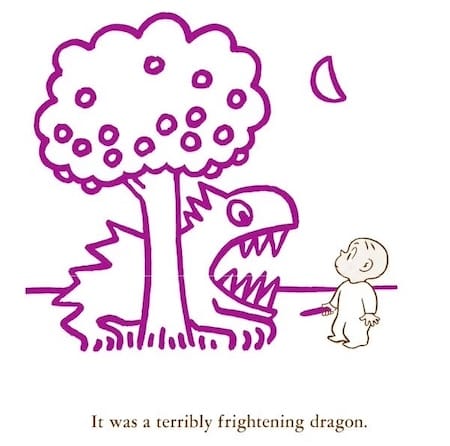
Of course, pockets of this imaginary life remain accessible to us as adults. Whether through music, a novel, theater, or a painting, we temporarily re-immerse our adult souls in that empathetic space of the imaginary, where our hearts are able to hold truths we can’t touch as deeply or as honestly in the light of the real.
As the philosopher and novelist Iris Murdoch explained,
“We surrender ourselves to [art’s] authority with a love which is unpossessive and unselfish...and whether representational or not it reveals to us aspects of our world which our ordinary dull dream-consciousness is unable to see. Art pierces the veil and gives sense to the notion of a reality which lies beyond appearance.”
Like children, when we allow ourselves to engage with imagined worlds, we know that time spent dwelling in this realm can be simultaneously unreal and deeply true. The concept of empathy itself grew out of the philosophical investigation of why the human heart can be moved by inanimate objects. Why do we invest emotion in our experience of a sculpture, for example, while knowing it is not alive?
The imaginative play of children offers us an answer to this question. It is the very fact that we know we are engaging with something that is not real that allows us to open ourselves up to a level of vulnerability that might subsume us otherwise.
It is in imagination that we learn to hold love and grief and joy and humor and rage and uncertainty, so that when we meet these feelings in the real world we have some practice navigating them. And it is also in the realm of imagination that our own most complex human experiences can be reflected back at us, so that we might feel less alone and less at sea in reality.
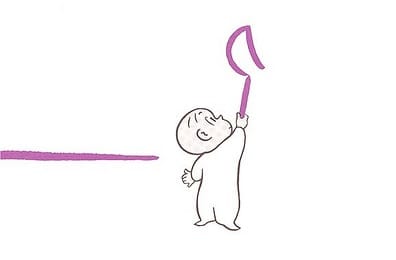
There has been much talk and wringing of hands lately about whether computers and algorithms are conscious and therefore worthy of being treated as living beings, endowed with rights. While I understand that many of these conversations are being prompted by those with a financial and political stake in convincing us to grant rights to products, I think we could stand to learn from preschoolers here, nonetheless.
After all, children are fluent in traversing imaginary terrain.
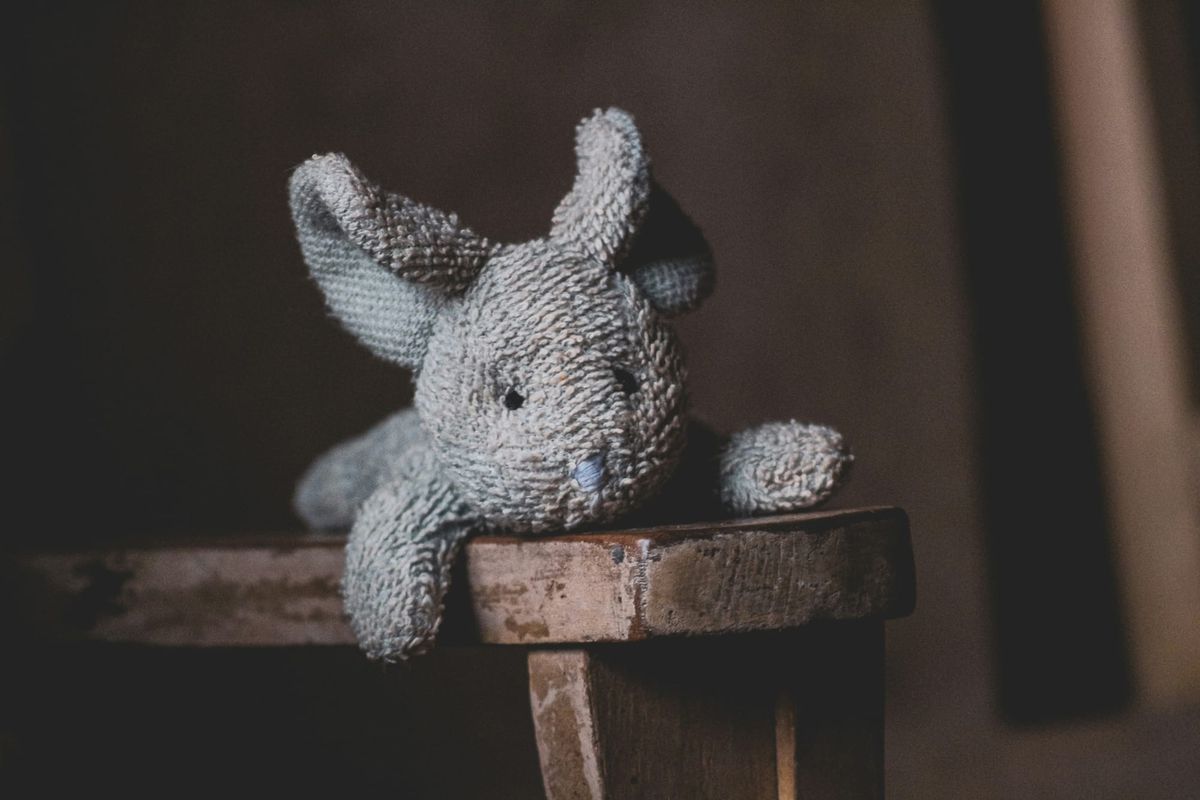
Deep down, children know that their imaginary friends and stuffed animals are not “alive” in the same way that humans and real animals are. They know that the extent to which their imagined bonds may feel real is wholly dependent on their own love, which is real. The emotion is real. But the emotion resides within them. It is their own very alive heart and mind that lend a toy or a character the temporary illusion of life, not the other way around. The boy gives the Velveteen Rabbit the impression of life through his own love. The love is his, and so the life is, too.
This is why children often announce their ideas with the declaration, “Let’s pretend.” What makes childhood so unique is the ease with which children are able to slip into the reality they’ve invented and inhabit it for a time, only to slip back out again.
“You’re not supposed to stay dead” is a reminder, child-to-child, that there are agreed upon conceits and rules in play. It is a game, and the value (and fun) of it depends on its fiction being understood and agreed upon.
Of course, the potential, even for children who are well versed in the imaginary, to become confused about whether a computer program that acts like a friend is real is a serious problem. We have seen the danger, particularly for teens, of being drawn into the lure of talking to a void that seems to answer you back.
But, for adults who are debating this question of automated consciousness, I’d encourage you to spend some time with preschoolers. The youngest children may be the most helpful here. They may ask you, as one child did in a study of imaginary friends, “You know it’s just a pretend girl?”
Wishing you the vulnerability to open your heart to experiences of human imagination, and the discernment to recognize when the beating heart you hear is your own,
Alicia
P.S. If you haven't had a chance to read last week's note about Oscar Belgal’s son, I hope you will. Additionally, in the wake of yet another school shooting, a reminder that we could choose a different reality. It is within our power to take better care of children.
A few things I found helpful and hopeful this week…
- ‘Radical Street Librarian’ Quits Her Job, Then Transforms a Trolley into Mobile Library
- Scientists discover 180,000 giant tortoises on one Seychelles island
- Beavers Are Having a Moment
- And Benjamin Riley and I are looking for artists! Is this you?