The Challenges of Expansive Empathy
Processing sadness without inflicting more pain

“if we sense enough of each other to know
in which direction to fly away from being
preyed upon, but never from one another”
~Emily Schulten
Last week, millions of people mourned the loss of a nine-year-old hippo at a zoo in Cincinnati. Fiona first captured hearts as a 29 lb premature baby, nursed toward survival by a devoted care team, including several NICU nurses from a local children’s hospital, expert at placing challenging IVs. Many from that same care team tried, with similar devotion, to save her life last week, after she swallowed a knit hat that had landed in her habitat through a sequence of events it is clear no one could have foreseen.
A child tossed the hat, as children will, which was then caught on a ceiling fan and flung by the blades of the fan into a small opening in Fiona’s enclosure. The child and their parents are now at the center of an online frenzy, calling for consequences as extreme as jail time.
Every aspect of Fiona’s story and of our response to it is emblematic of the complex and often fraught relationship between humans and wildness—and between our capacity for finite empathy and the difficulty of managing empathy that demands more nuanced, multi-directional care.
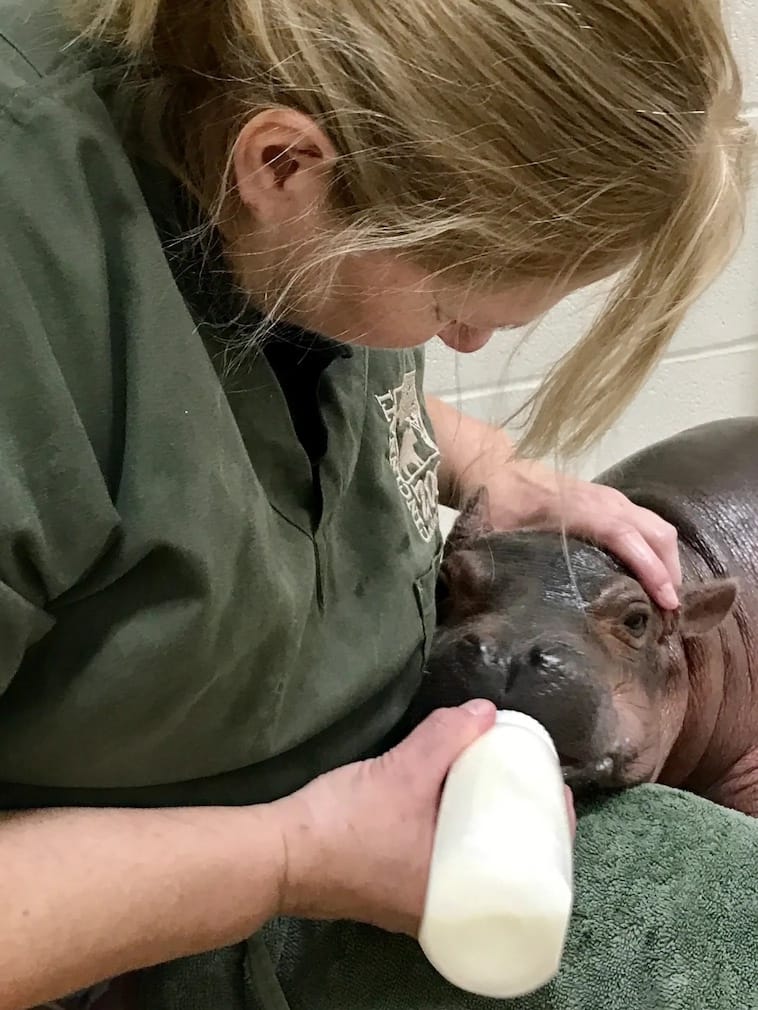
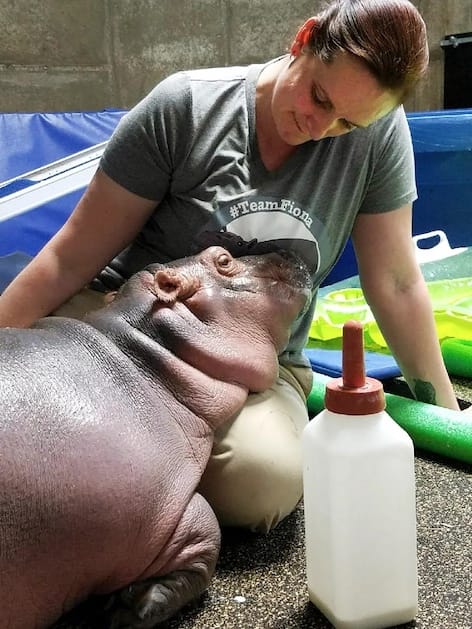
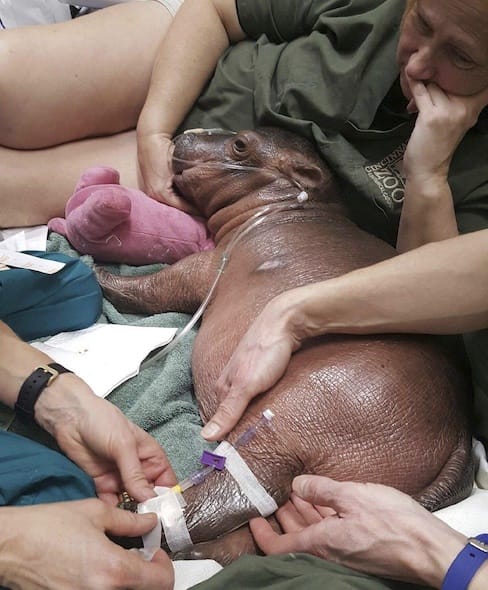
Baby Fiona's care team
Fiona’s suffering over the past two weeks ought to break our hearts. The suffering of any living creature always should. The plight of wild animals, whose lives are increasingly unnatural, whether because they are living in zoos or are pushed to the muddy margins of the ever-expanding, human-constructed world, should also break our hearts.
The unbearable weight of responsibility that a child will likely now carry forever deserves care, too—a child who probably also loved Fiona and unwittingly did a very childlike thing with tragic consequences. That child's parents, who could easily have been any one of us if we are honest about the unpredictable realities of day-to-day life with children, also deserve our empathy. Everyone's child has impulsively tossed a hat or a mitten or a shoe or a toy into the air at some point, maybe even at the zoo. These were not poachers wielding rifles; they were imperfect parents, just as every one of us raising children is.
It is difficult to hold webs of compassion this complex intact, especially when we are sad. Sadness makes us want to lash out and assign blame. But allowing the sharp edges of our individual pain to inflict more suffering on others, especially on a child, doesn’t lead to a more humane, less heartbreaking world. Instead, we have to try to create wider circles of care that can encompass complexities and contradictions. The instinct to find a villain and punish them, in order to protect our own wounded hearts, almost always leads to a contraction of our capacity for empathy.
We are also living through a period in which those with massive power are rarely held accountable for harm at massive scale. This can lead to a sense of helplessness, and I think, at times, feeling helpless can make us more likely to look for villains among the ordinary people close to us, just to have somewhere to direct our hurt and rage. But a child, a child's parents, and those doing their best to care for wild creatures—none of these individuals deserve the overflow of our anger, just because they are within reach and the true sources of our pain and dehumanization rarely are.
We have to resist the urge to let our anger at cruelty we feel we can't control make us lash out more cruelly at easier targets. Sometimes, when we find something that sparks our compassion at an intimate level, we allow that care to harden us to anyone beyond its singular reach. But we will only make the world less harsh if we try to turn our love and our empathy out not in, softening the borders of our compassion, not calcifying our broken hearts.

Zoos have always occupied an especially fraught place in our Anthropocene epoch. The history of zoos extends back to ancient civilizations, where the display of wild animals in private menageries was evidence of wealth and power across royal cultures. Since the eighteenth century, these menageries have evolved into sites for the scientific study of animals and, in the best places, as forces for conservation. There remains a wide breadth in the care of animals within these environments, from the most inhumane sites of exploitation to those that offer a high level of devotion in their attempts to approximate natural habitats, reduce animal stress, and provide advanced medical care.
But, even in the most compassionate and well-resourced and regulated settings, there will always be a tension between balancing the mission of bringing humans into closer relationship with animals and the natural wildness of those animals.
Wild animals were never meant to live in human-constructed environments, and yet, in our human-dominated age, even animals living in nature are increasingly forced into direct contact and conflict with the built world. In order to protect wildness in our modern age, it is essential to foster empathy and understanding for animals, and zoos are among the most effective paths toward human connection with wild creatures. But they also inherently deprive these creatures of their wild lives. And they have a tendency to leverage our desire to possess other creatures, keeping them within our reach. Our human love of the wild, while often sincere, is rarely simple or ethically tidy. Acknowledging this is essential to avoiding the worst harms we humans are capable of toward the non-human world.
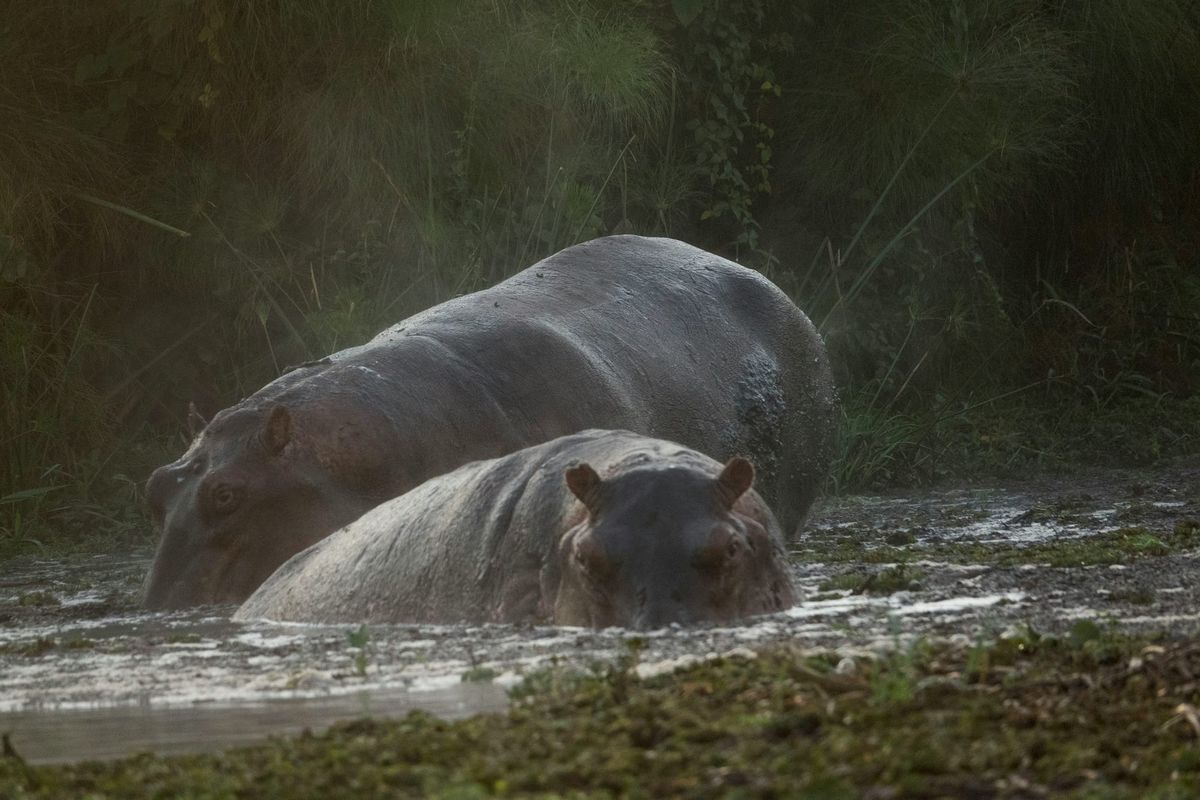
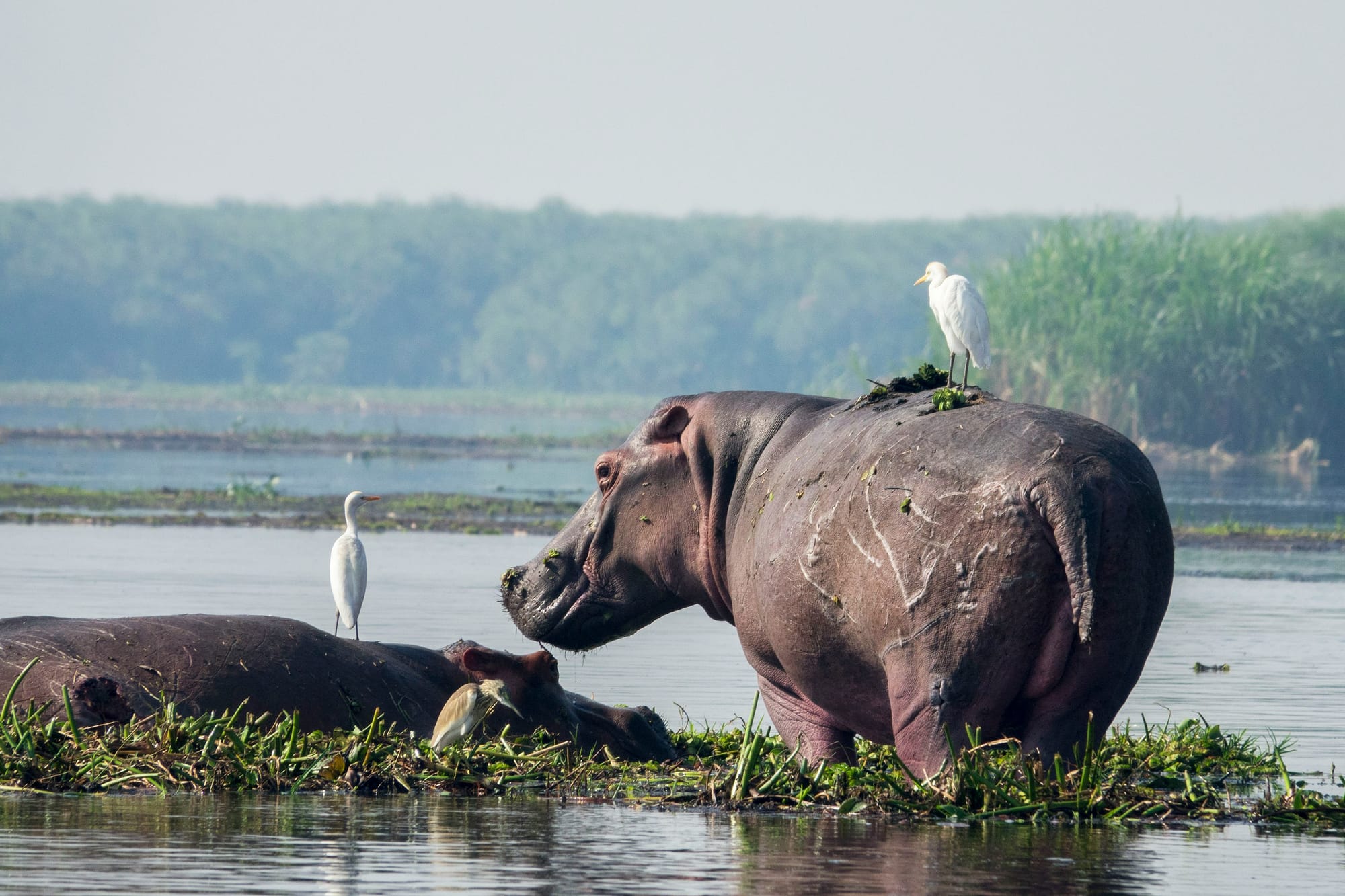
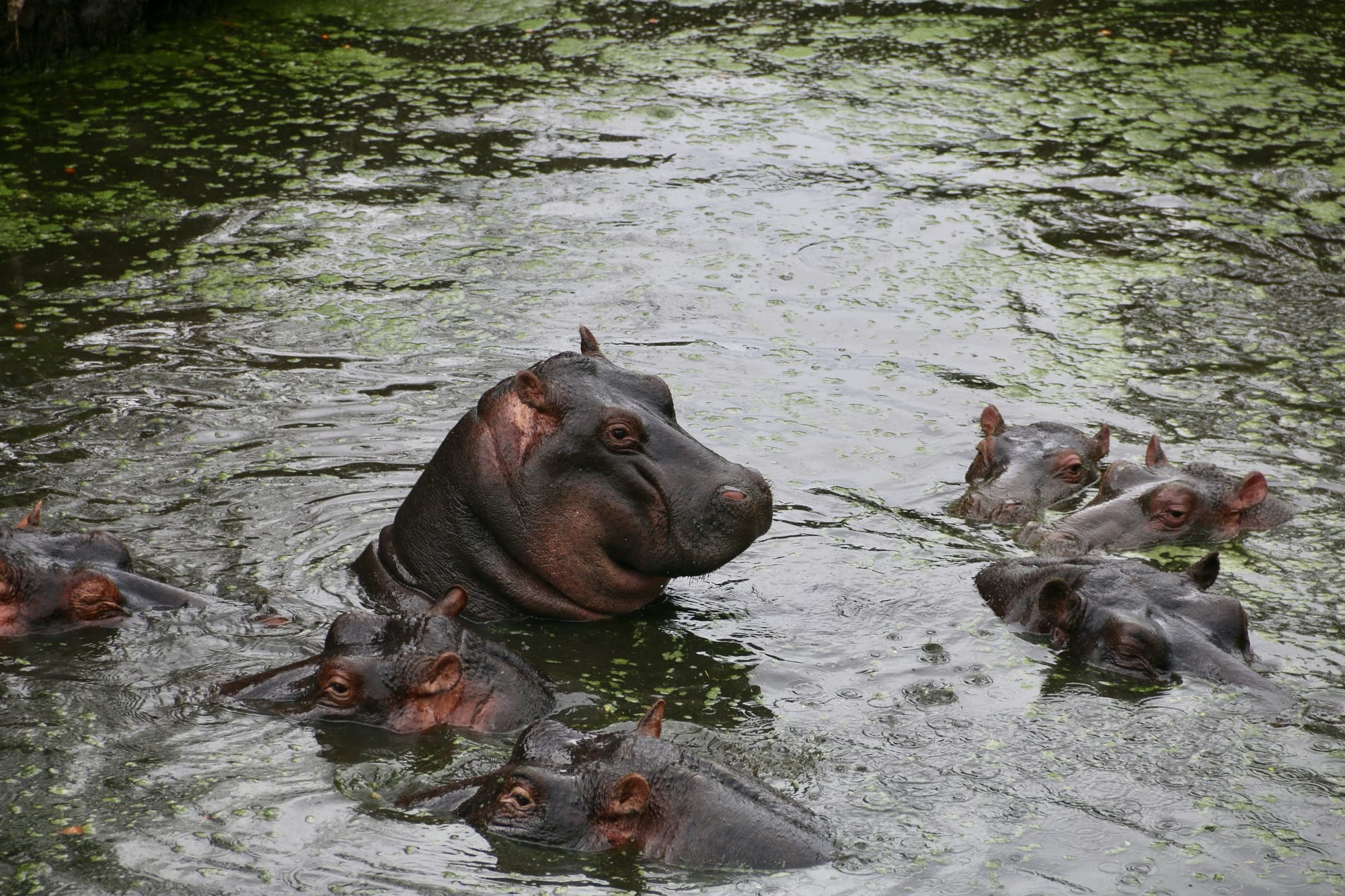
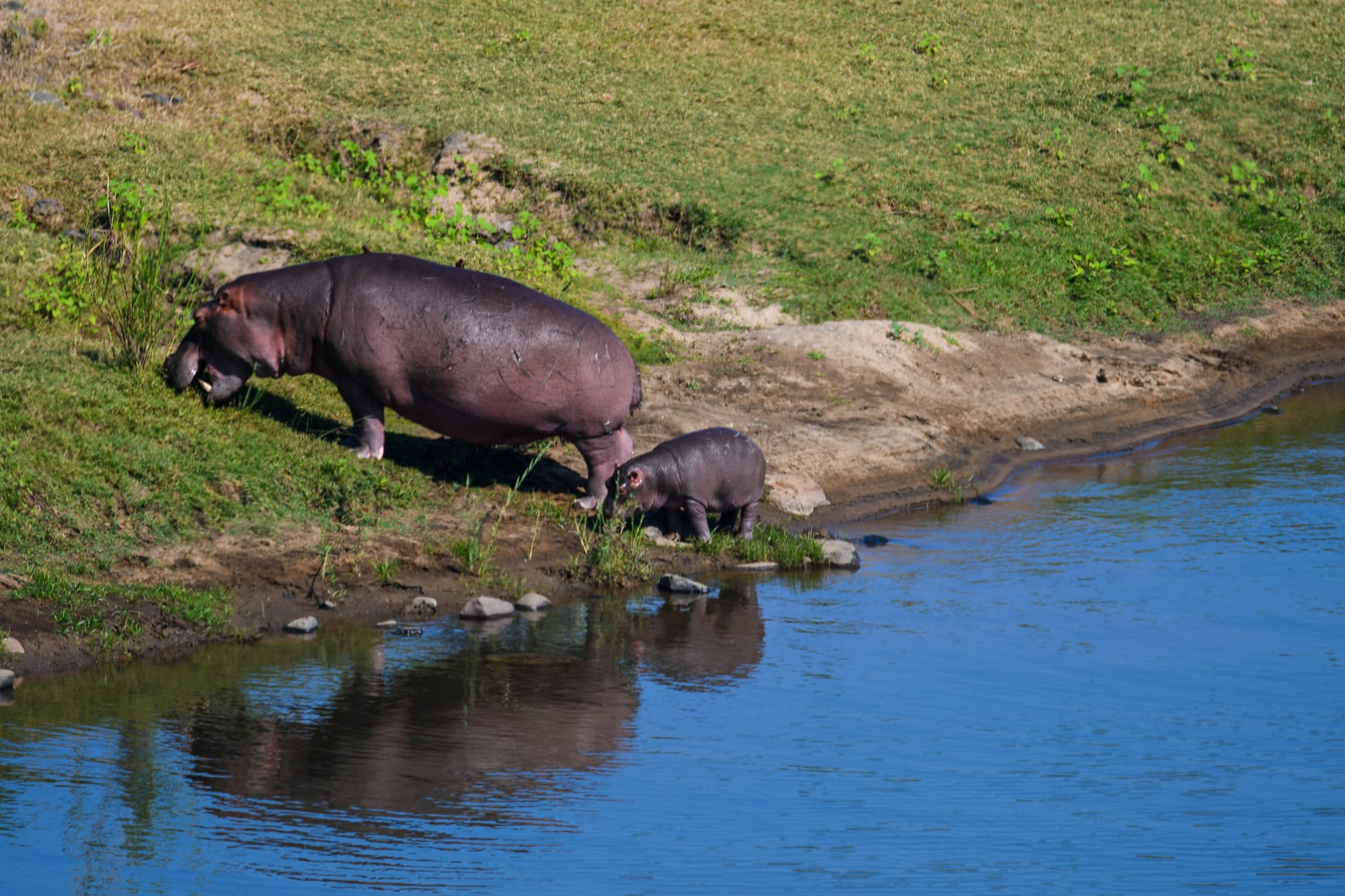
A premature baby hippo like Fiona would probably never have survived in nature. Yet she died as a result of her proximity to humans. She survived because of her relationship to us, and she died because of the limits of that relationship. In the nine years between her birth and her death, millions of humans, including many children, developed a powerful sense of connection to her and to her survival. This was a direct result of her life far removed from the murky depths of the Nile River where her truly wild counterparts roam and wade.
I hope that many of the children who peered with wide, curious eyes through the glass of Fiona’s watery enclosure, or watched her through screens far from her Cincinnati home, will grow up with a deepened sense of personal investment in the lives and well-being of other animals like her, both in captivity and beyond.
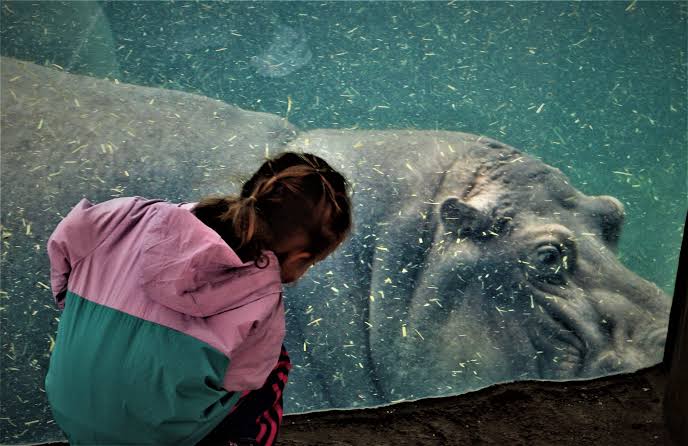
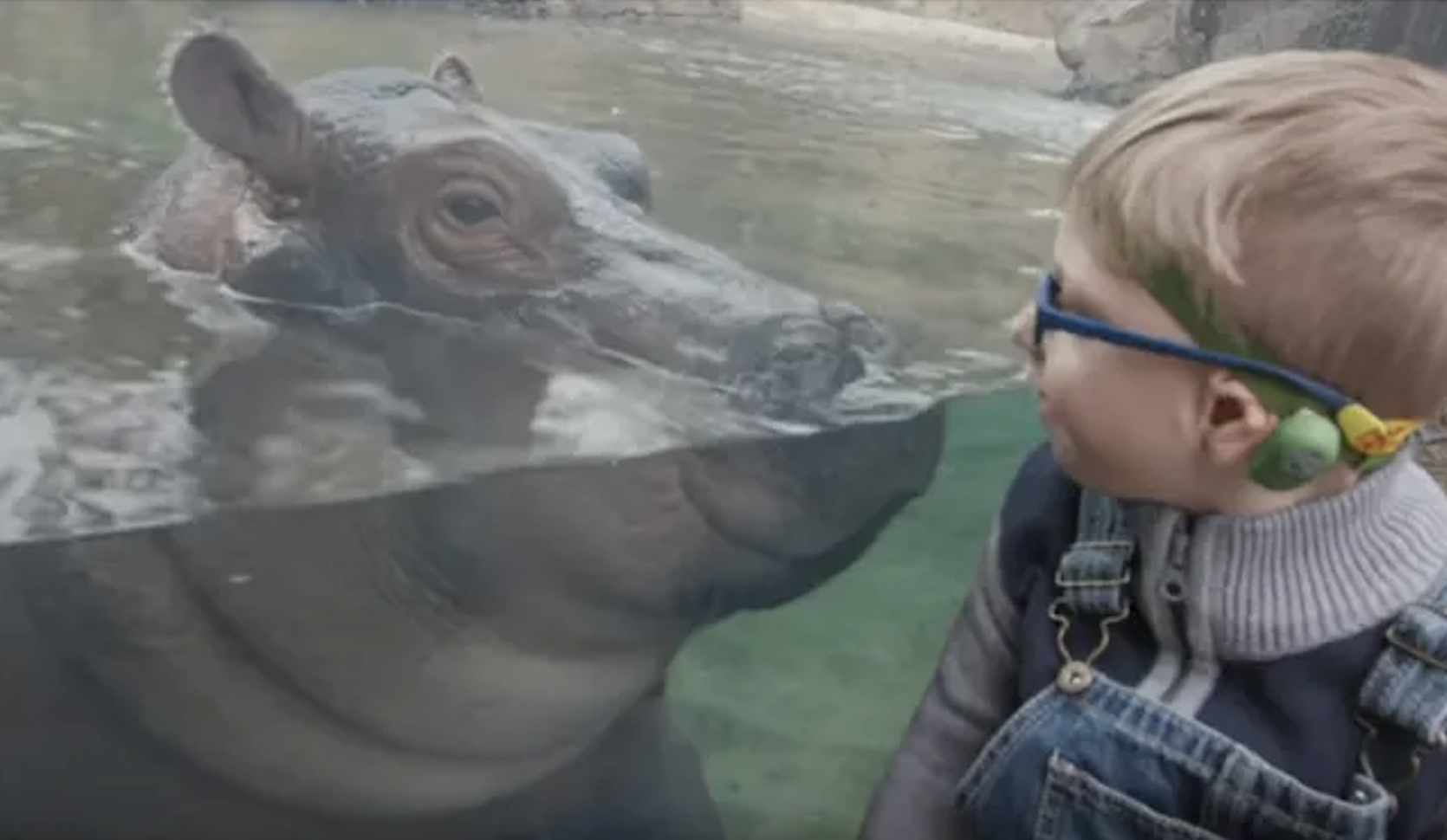
Children observing Fiona the hippo
This is my wish for my own son, who has always felt so connected to wild animals that he told me frequently, when he was as young as seven, that he thought it would be more just for humans to be the species facing extinction. Greed was the quality he identified, in his seven-year-old articulation, as the defining sin that separates humans from the rest of the animal kingdom. “Other animals hurt each other, too,” he explained, “but they’re only trying to survive. Humans cause harm even when they have what they need.” His second-grade logic still remains hard for me to refute.
We have a responsibility, within the hard edges of our constructed world, to try to hold all the complexity of these truths honestly and gently, even as we mourn the loss of a single animal we had come to love. We humans are better at the empathy that grows from intimacy than we are at extending our empathy more broadly, especially when widening the circle of our care requires us to look directly at painful, conflicting truths. I think this is what the most humane zoos try to ask of us—in this case, to extend our care for one animal in Cincinnati, who likely survived in the first place precisely because she was born in captivity, all the way to the banks of a river on the other side of the world, where her wild counterparts live a life much closer to the one she was meant to live, far from knit hats and fingerprints on glass.
Surely, we can at least extend our empathy to the other children and families, gazing at wild creatures by our side, trying to navigate the impossible moral dilemmas of an age in which other living beings—even other humans—are so often treated as disposable. Let’s, at minimum, try not to be tempted by our grief to consume one another in these consumption-driven times.
It is wrenching to balance all of this. It requires our commitment to an expansive form of empathy that does not come easily. Just as hippos did not evolve to live enclosed by cement and glass, we did not evolve to extend our care all the way around the world. We evolved to care for those whose eyes we could gaze into and whose faces we could touch. But the world humans have created requires us to extend our hearts and minds beyond what comes easily, to care for both our neighbors and for people and for creatures far beyond our personal reach or experience.
As Mary Oliver, contemplating a lifeless loon, once wrote:
“I tell you this
to break your heart,
by which I mean only
that it break open and never close again
to the rest of the world.”
Wishing you the determination to expand the reach of your own care, even when you are most tempted to contract your broken heart,
Alicia
P.S. One of the first Notes on Hope essays was inspired by the story of Flaco the owl here in New York, which echoes similar tensions and lessons for our tenuous relationship with the wild world: I Carry Your Heart.
P.P.S If you are looking for something more productive to do with your feelings than blaming a child, I'd suggest the African Wildlife Foundation or Jane Goodall's Roots and Shoots.
A few things I found helpful and hopeful this week…
- Stanford scientists discover a way to reverse coral bleaching at record speed
- Apocalypse Now and Then by Arundhati Roy
- Close Reading for Life: On Three Literary Virtues by Dan Sinykin
- Why the ‘Sister’ sketch on ‘Saturday Night Live’ struck a nerve by Jessica Calarco