Looking Through a Child’s Eyes
Year-round lessons from a very New York Halloween

“There was a time
(please, God, not that long ago),
I wanted to run away
and join the circus.
It seemed realistic:
the clowns would feed me,
I would get to know the sky
in different places,
and the lions would understand
that I was on their side.”
~Dorothea Grossman
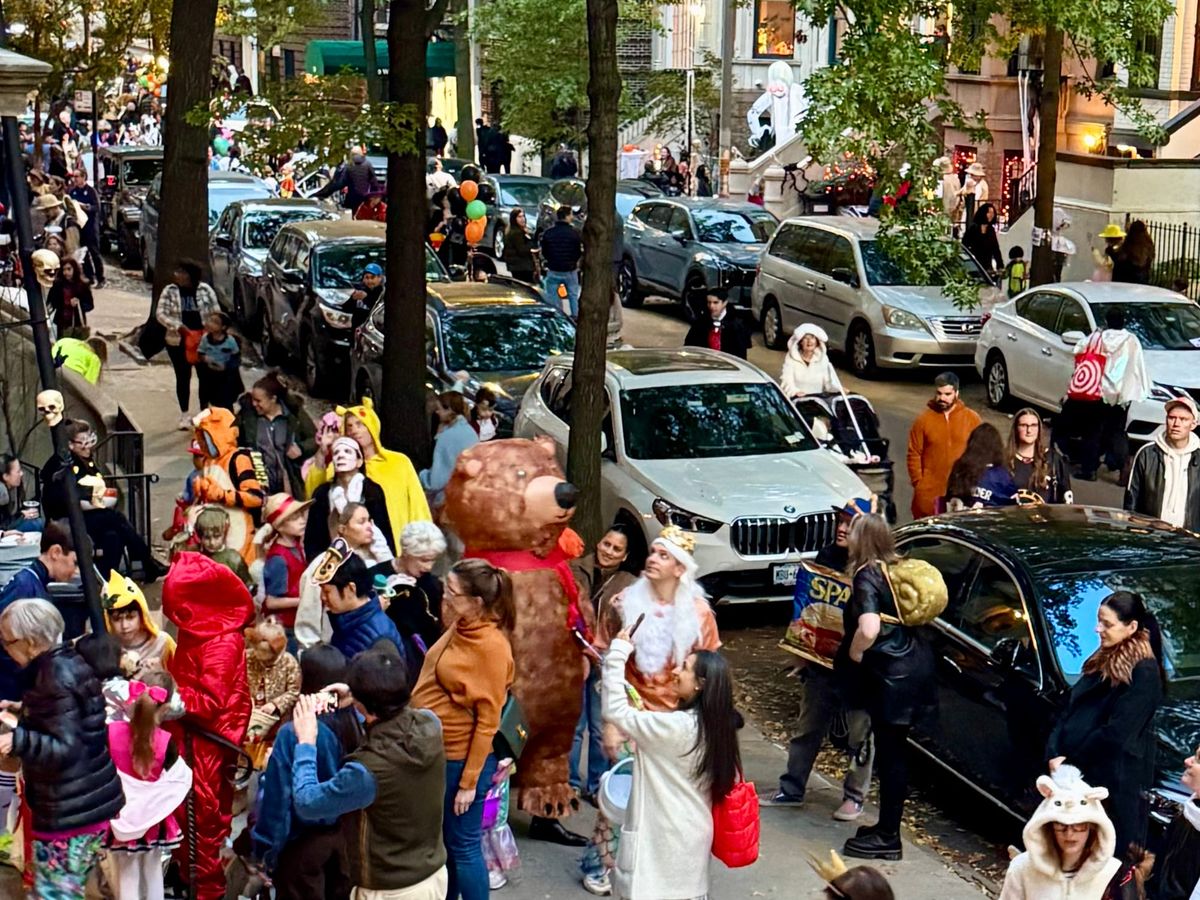
I spent yesterday morning arranging skeletons, crows, and orange twinkly lights on the steps of our New York apartment building. I was a little late this year. Usually I try to do this at least a week ahead of time; one of the delights of fall in New York, especially for children, is watching all the Halloween decorations slowly take over the windows and stoops of the city throughout October. We happen to live on one of New York’s destination Halloween blocks, and this is a serious responsibility, let me tell you.
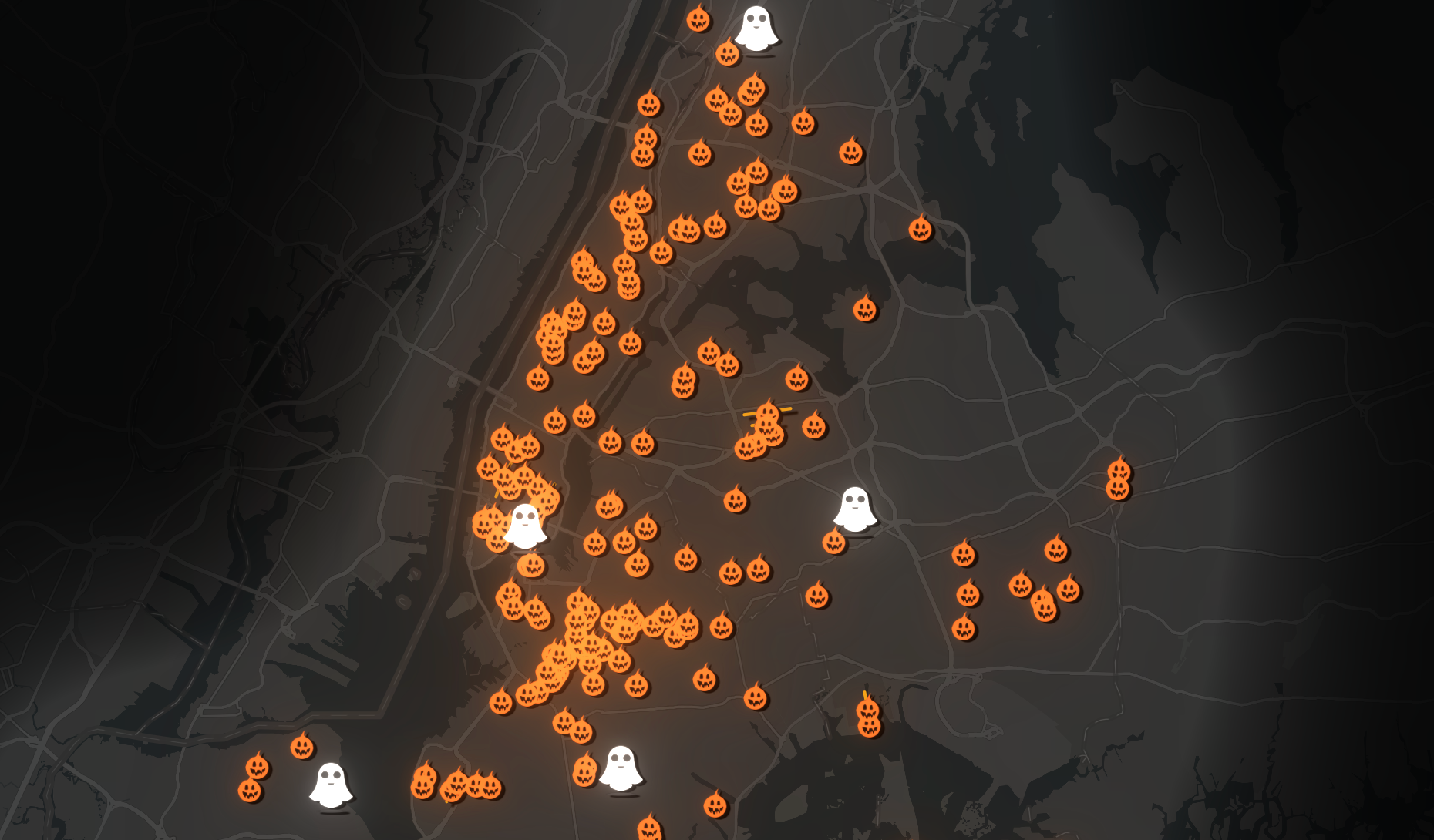
New York shuts down 160 streets to traffic. There is an interactive map. We don’t mess around.
We’ve lived in our current apartment for eight years, and I did not always do this. For the first few years, despite being a life-long New Yorker, I assumed that the buildings that went all out on street-level decorations were either those owned and occupied by a single family, or those with a particularly friendly and committed landlord or doorman.
We decorated our apartment as a sort of consolation prize to my son, but every year he would note grumpily that our building was one of the few on our block that was left out of the public fun. So, a few years ago, I asked our landlord if she would mind if I decorated the front steps, promising to clean everything up myself the following day. She responded immediately that this would be great, actually, and to have fun. (I should note here that we happen to have an extremely rare-breed of New York landlord, a genuinely kind and helpful mother and daughter duo. I’ve lived in New York my whole life, and this is not the norm, but it should be.)
What I discovered that first year of decorating was that I had been wrong. Sure, there are wealthy private homes throughout the city that become extensions of Broadway on Halloween, hiring professional decorating crews and even performers. Fine. At least this is a use of private resources that actually has some modicum of community value. But what I discovered, as I stretched spooky caution tape across our front door and propped skeletal crows along the banister, was that most of my neighbors, out doing the same, were more like us—the occupants of one apartment in a building full of other apartments, who had taken it upon themselves to make our block into a sort of cobbled together, hyper-local, one-night carnival.
The building to the right of ours is decorated each year by a family that lives on the fourth floor, I now know. They’ve lived there since their kids, who are off at college, were little, and they are keepers of much neighborhood Halloween lore. In the building on the other side, a second floor resident constructed a candy shoot this year to deliver treats to those waiting eagerly on the sidewalk below. This was a huge hit. Across the street last night, a group of roommates in a ground-floor apartment turned their kitchen window into a pizza delivery station and passed out slices. In addition to being unexpectedly fun, I’m sure they prevented a few post-trick-or-treating, hunger-fueled crash-outs. Speaking as a mom who’s navigated a few of those over the years: genius.
In the course of decorating and passing out candy each year, I’ve gotten to know more of my neighbors than I knew before. We chat as we decorate, complimenting each other’s new additions and debating the ideal amount of candy needed to get through the evening (answer: much more than you’d think, I learned that first year). Others stop, pointing, smiling, and taking pictures as each building comes to life, especially, but not exclusively, those with kids. Sometimes we’ll talk for a few minutes. The kids will walk right up the steps to check out each skeleton and ghost.
New York neighborhoods have always had a deeper capacity for connection and care than many outside of New York realize. Some of this connectivity has grown harder to foster and sustain, as local businesses have increasingly vanished and the insulated nature of wealth has encroached on more and more of the city. But stoop culture remains real. And I’m reminded each October of how much potential for solidarity there is in coming together to create joyful experiences for children.
There are many ways to spark community connection and a sense of neighborliness, of course. But there is something uniquely good and nourishing about the way Halloween invites us to connect through the particular shared pleasure of making kids happy, and through the act of attempting, even briefly, to look at the world through the imaginative eyes of a child.
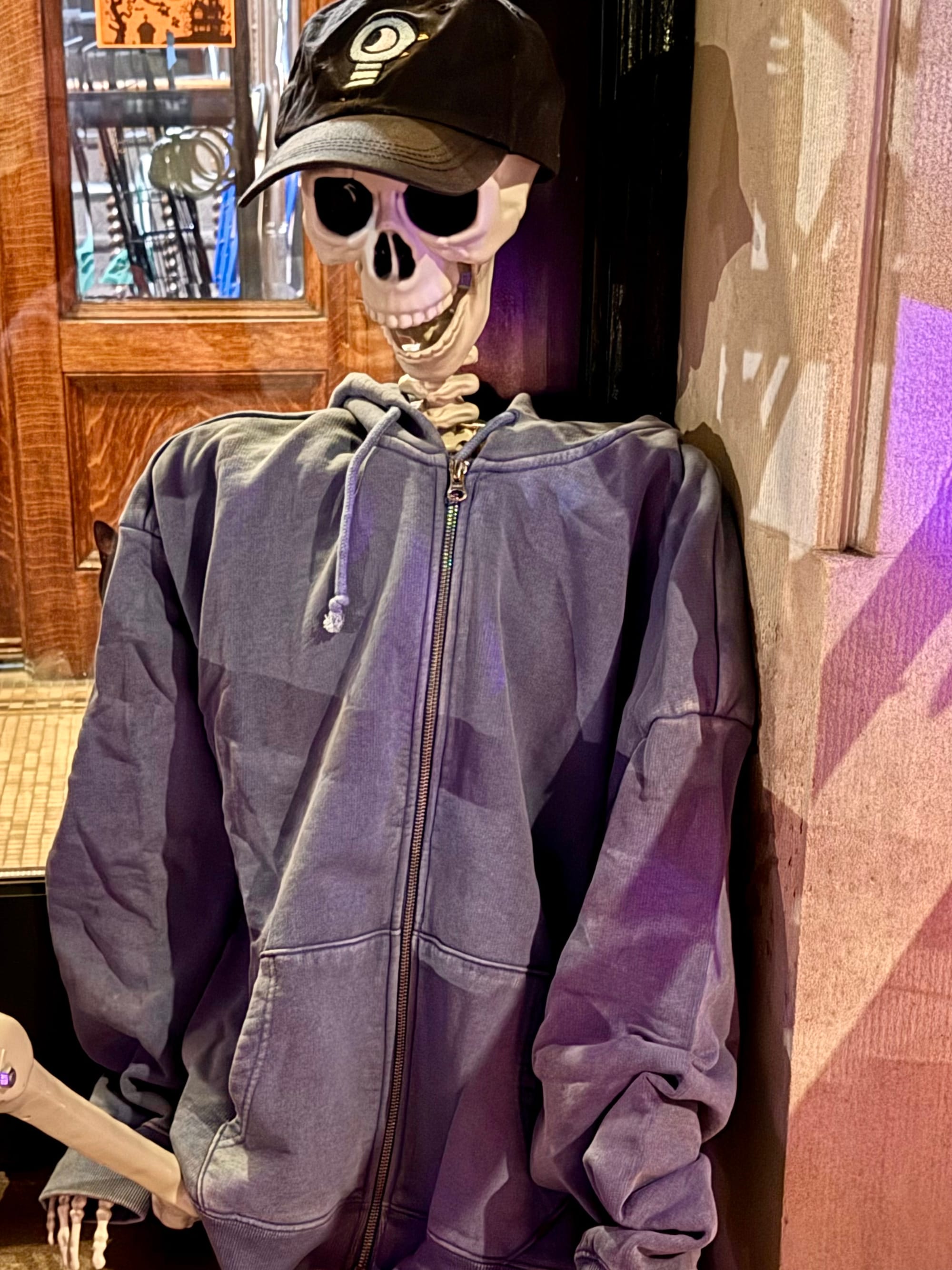
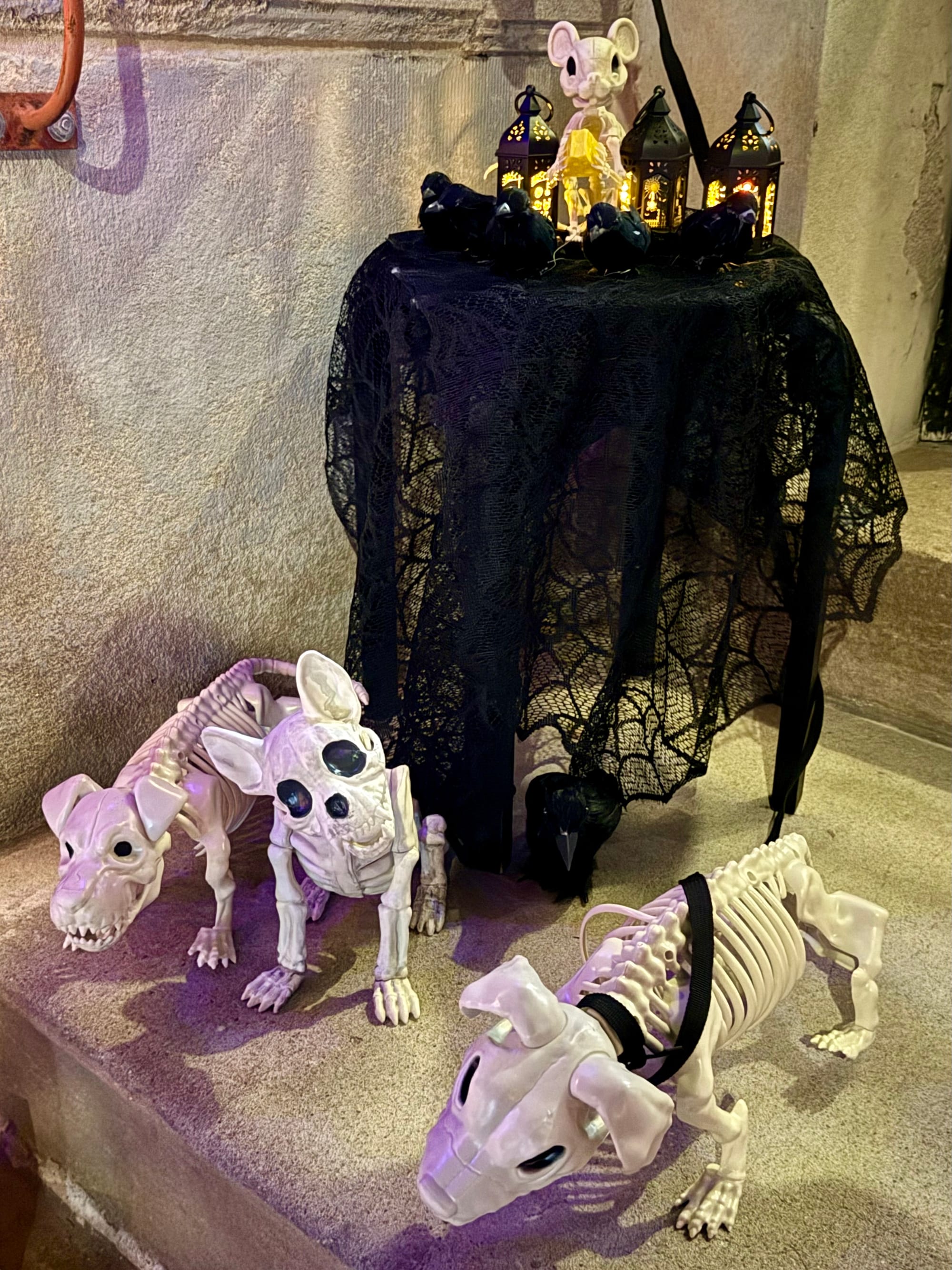
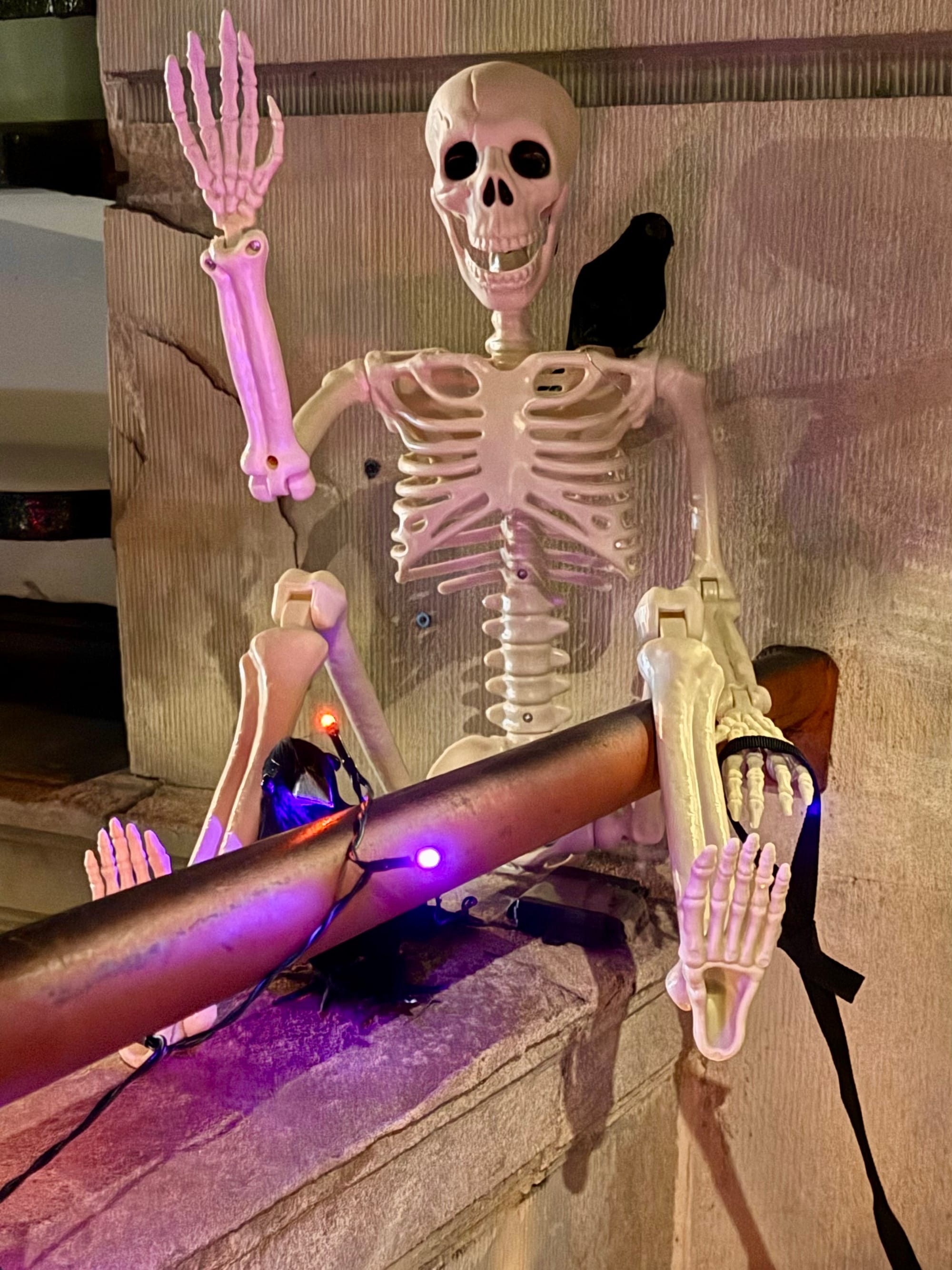
Everyday can’t and shouldn't be Halloween. And I’m not suggesting that every experience of community should be as full of excess and overstimulation as Halloween, or even that every experience of community needs to be cultivated specifically for children. In fact, some kids have a hard time with the excess of Halloween. One of the reasons I like passing out candy is that my teacher skill set allows me to engage those kids in particular, and make the evening feel a little friendlier for them, at least for a few minutes. And adult-centered community experiences are valuable, too, surely.
But I do think we would all benefit from creating and engaging in more opportunities to come together in shared activities that specifically center both the needs and the delight of children. I think we adults tend to be the best version of ourselves when we do this with sincerity and commitment.
This is not the same as coming together to control and confine children’s experiences. Channeling the perspective of a child is the opposite of building solidarity off of the restrictions many adults aim to place on their lives. The experiences I’m talking about, of connecting as adults through activities that truly center children, are ones that begin by listening to children and attempting to view the world through their eyes, not attempting to constrain that view.
At Halloween, this means thinking about what will bring children joy. Candy delivered through a shoot is more exciting than candy handed to you from a bowl. And attending to the fine line between fun-spooky and too-scary-spooky also requires a close connection to the lived experience of childhood. There are opportunities throughout the year to do this in a million ways—to look through the eyes of a child and to think about how we might come together for them through simple, communal gestures. Every little free library, neighborhood trinket box, Saturday basketball game, or community-built playground, for example, can be sites for connection that are rooted in a child’s-eye view.
Every time we do this, no matter how small or frivolous our efforts may seem, we make daily life a little better for kids—who are more often spoken of as a priority than actually treated as a priority in our culture. And we also develop the muscle of looking through the eyes of a child and acting from that vantage point when the stakes are higher.
It isn’t a coincidence that, in many of the communities hit hardest by ICE raids, for instance, some of the most effective and lasting local resistance has grown out of PTAs and school carpool groups. When we practice listening to children, thinking about the experience of childhood, and acting to make that experience a little better, we bolster our capacity and willingness to act in the best interest of children when their needs and even their lives are truly on the line.
I’m not saying that decorating your front door or passing out candy to children dressed as dinosaurs and anime characters will transform their lives or your own beyond a single evening. But I do think that the more frequently we are able to find opportunities that rest on the same set of principles—attending closely to the experiences of children and coming together with other adults to make that experience a little brighter—the more likely we will be to center children in every choice we make, and the more robust our community networks of care will become.
Every big decision and moment of profound courage rests on the many smaller decisions and moments that came before. Getting to know your neighbors a little better through an activity that centers children is both calisthenic, preparing each of us as individuals to center children more habitually, and an opportunity to strengthen the community fabric that is often necessary to protect children from the worst harms our society inflicts on them.
Every day doesn’t need to involve candy shoots and costume parades. But any day spent listening to a child and doing something to make their life better is meaningful and helps build a world that actually values children—not only the future we imagine for them, but the lives they are really living today.
Wishing you a child’s eye view and neighbors who will share the view with you,
Alicia
A few things I found helpful and hopeful this week…
- The ‘National Park’ That Stretches From Coast to Coast - This reminded me of Miss Rumphius: "Do something to make the world more beautiful."
- Patrick Stewart: the legacy of domestic violence - Patrick Stewart was important to me for many reasons, one of which was that he was a life-long advocate for domestic-violence survivors (and the LGBTQ+ community and animal rights).
- We need higher aspirations than “desperate efficiency” in education by Nathan Parham
- How Serbian Students Toppled a Dictator