Let Every Child Play
What it means for childhood when the playground bullies carry gavels

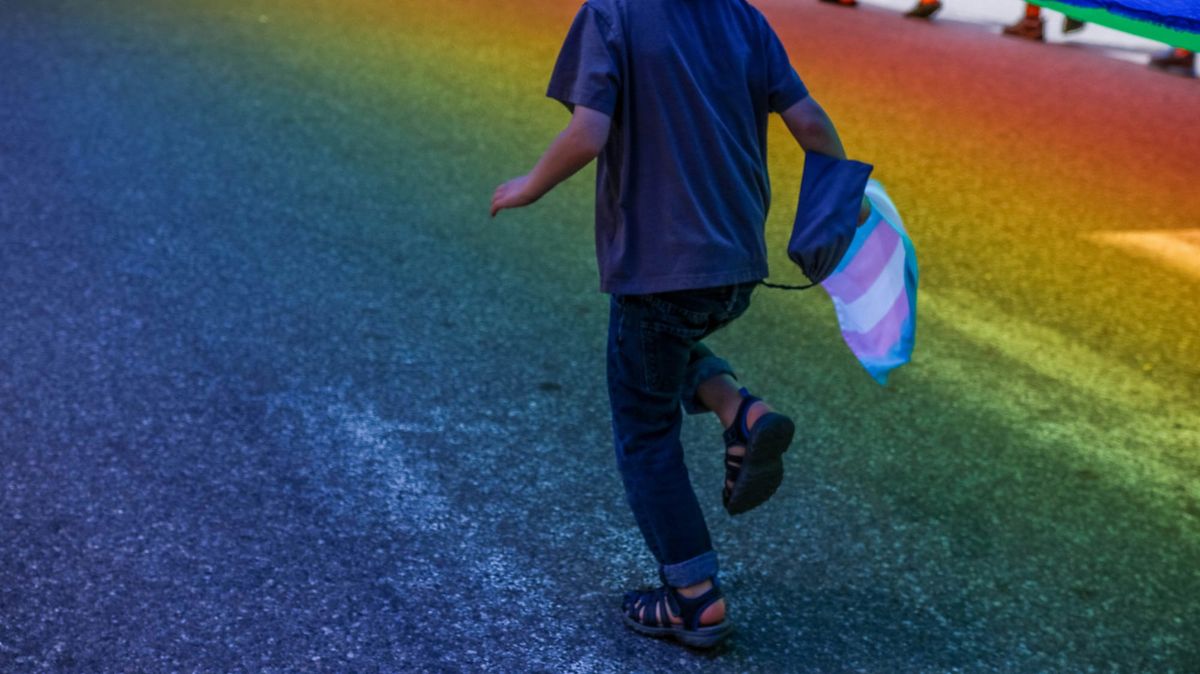
“No one stands by passively
while their joy gets lost in the dark.
I know it is its own injury,
spending too much of your life
just holding yourself together—”
~Andrea Gibson
Early in my teaching career, I remember a colleague sharing an anecdote from the dress-up corner of her classroom. Shrek was rolling out sequels at the time, and kings, queens, princesses, knights, and dragons ruled the themes of preschool play. One morning, a child in her class, who had donned a crown and a cape, was standing proudly on a box having declared themselves the king, when another child found a second crown, placed it on their own head, and announced that they would be the queen. But, just as this child stepped forward, a third child pointed and declared, “You can’t be the queen, you’re a boy.” The children all paused, considering the rule that had just been introduced, until a fourth child piped up, “Why can’t he be the queen, she’s already the king!” This second point was quickly ratified by the group, whether because of the inherent inequity it had highlighted or because, according to the edicts of preschool dramatic play, the role of the king had already been claimed.
While the gender dynamics of this exchange feel especially clear to the adult ear, the anecdote is not at all anomalous. Children’s play is a constant stream of identity exploration, as they try on different roles, experiment with the norms they observe around them, and determine, over time, which roles and costumes feel most authentically aligned with their own internal compass. The costumes themselves don’t shift the needle of a child’s identity any more than the clothes their parents lay out for them in the morning do; fabric and props and the color of their nursery walls don’t have the power to determine who a child will become, as much as adults may attempt to invest these materials with prophetic weight. But, what play does have the power to shape is a child’s emerging awareness of which roles feel more like masks and which roles feel more like mirrors.
Play grants children permission to try on many different lives—lives that are exciting because they are so removed from the confines of reality, be they dragons or superheroes, and lives that signal the deep familiarity of internal knowledge made, even briefly, external. And, as children pull crowns and capes from the bins of imaginative prompts we offer them, play also takes on the power to illuminate whether the roles that feel most in tune with the frequency of their own voice will grant them belonging or relegate them to the sidelines.

Last week, the Supreme Court ruled that trans kids, trans girls specifically, have no protection under either Title IX or the Equal Protection Clause of the 14th Amendment. As a result, they may legally be excluded from playing on girls’ or women’s teams. I’m not a lawyer, so I’m not going to speak to the legal implications of this ruling here, but if you're inclined to think that the legal ramifications of this decision are narrow, I urge you to read some of the critiques from actual lawyers that I’ve linked at the end of this note.
What I do know quite a lot about, though, is play. On a very basic level, this case was about the right to play. It was about who gets to play and who doesn’t and who gets to decide. And on this, the children trying on capes and crowns in the dress-up corner did a much better job of adjudicating the bounds of equity and the implications of exclusion than the Court just did.
These are questions children navigate constantly in the classroom and on the playground, and kids don’t always do so as neatly or easily as they did in the dress-up corner that day. But the extent to which children understand how much power they wield when they do attempt to exclude another child from play is itself evidence of how critical play is to their well-being, and how impactful it is to be pushed out of the game. While the legal conversation may center on how significant a decision about sports can be, based on the likelihood that its logic will be expanded beyond sports, any child can tell you that the game, in and of itself, is also critically important. Even if the only implication is that six of the most powerful people in the country just made it permissible to exclude some children from play—a group of children who are already among the most vulnerable—that decision alone is immense in the life of a child.
The educator, Jane Katch, in exploring the dynamics of violent themes in young children’s pretend play, found that exclusion was actually the most powerful predictor of real harm, often weaving through the dynamics of play much more subtly but impactfully. And, by contrast, intentional inclusion holds demonstrable benefits, both for individual children and for groups. She notes,
“When a potential scapegoat is encouraged to stay in the community, rather than to leave it, and when individuals are encouraged to look at the uncomfortable issues rather than avoid them, the community can become stronger and the individuals within it can mature.”
For children, play is the most fundamental way they make sense of the world and of their place in a community. So exclusion from play not only deprives them of critical opportunities to learn and grow, it severs their sense of connection and belonging. We know that a sense of connection, both at home and outside of the home, is the single most protective factor in mitigating every major risk to long-term well-being. When we systematically exclude children from play, we deprive them of these essential connections and remove vital, lasting protections. There is no such thing as “just play” for children. These decisions have lifelong implications, setting them directly in harm's way, developmentally and socially.
The implications of exclusion aren’t limited to the early years of dress-up and fantasy play either. While play begins here, it morphs as children grow. It becomes more structured, takes on a wide array of discrete forms, and aligns increasingly closely with who children and young people know themselves to be, with the pursuits they feel passionately about, and with how they feel most able to express their truest selves and chase their deepest ambitions. The author and educator, Tony Wagner, describes the play of older children as "disciplined play,” and research has shown that the ability to engage in this disciplined play lays the groundwork for a purposeful life, fueling well-being and achievement across a lifespan. Wagner says,
“Disciplined play is foundational to the human experience, to human aspiration, as well as to human accomplishment.”
While sports is not the only form of disciplined play, it is certainly one of the most ubiquitous. And, because play becomes increasingly aligned with children’s personal interests and self-expression as they grow older, pushing them out of one form of play does not mean that they will simply be able to find something else to satisfy these developmental needs. Additionally, if a child’s only option for continuing to play is to leave their own sense of identity off the field, they will either choose not to play at all or they will not derive the benefits that are specifically tied to engaging in an activity that feels deeply, intrinsically, personally meaningful.
As the educator and play advocate, Jill Vialet, says,
“Play matters because it compels us to choose, to put a stake in the ground and say, ‘I care.’ And in doing that we better come to know ourselves. Play matters because people matter. It reminds us of our interdependence, to really see other people, and in turn to be really and truly seen.”
Play is where children express themselves most freely and learn to understand and value each other’s expressions. Exclusion from meaningful, self-chosen forms of play and playmates robs kids of this essential developmental experience. To the adult lens, it may be “just sports,” but to a child the ability to play, and to do so while feeling fully themselves, is vital. And the data is clear that including trans kids in play does not limit the benefits or potential accomplishments inherent in play for any other child, as the Court suggests. It only puts a group of children, who are already extremely vulnerable, at even greater risk.
To anyone who finds justification or solace in the fact that, statistically, trans kids represent a very small number of children, I would ask you to reflect on whether that logic would feel tolerable to you when applied to any other group of children. And, if so, how many children, precisely, would need to suffer for their well-being to become important enough to matter?
Losing access to play is significant and consequential for children. It would be significant even if this ruling didn’t have the potential to ensnare other rights or other groups of people. The United Nations Convention on the Rights of the Child defines play and recreation, in Article 31, as key rights to which all children are entitled, because the role of play in their development and well-being is so essential. The right to play is so significant, in fact, that in 2013, the U.N. issued an additional statement elaborating on the importance of Article 31, in particular. The statement explains:
“Play and recreation are essential to the health and well-being of children and promote the development of creativity, imagination, self-confidence, self-efficacy, as well as physical, social, cognitive and emotional strength and skills. They contribute to all aspects of learning; they are a form of participation in everyday life and are of intrinsic value to the child, purely in terms of the enjoyment and pleasure they afford. Research evidence highlights that playing is also central to children’s spontaneous drive for development, and that it performs a significant role in the development of the brain, particularly in the early years. Play and recreation facilitate children’s capacities to negotiate, regain emotional balance, resolve conflicts and make decisions. Through their involvement in play and recreation, children learn by doing; they explore and experience the world around them; experiment with new ideas, roles and experiences and in so doing, learn to understand and construct their social position within the world.”
Of course, as I’ve written previously, the United States is the only country in the U.N. that has failed to ratify the Rights of the Child. So, it isn’t surprising that our highest court would struggle to recognize the implications of depriving children of the right to be included in play, let alone a group of children whose identity is already profoundly marginalized.
The implications that this decision holds for the full realization of democracy are not limited to the potential legal extensions. Play itself is fundamental to the full realization of children’s rights in society and to their role as future democratic citizens. Jill Vialet further explains,
“Play gives us the skills that we need to become engaged citizens. Our collective well-being, or, I would go so far as to say our democracy, or the possibility that our democracy will realize its full potential, is dependent upon opportunities for play being allowed to flourish equitably.”
With this decision, the Court has become the schoolyard bully, scapegoating the most vulnerable children in order to protect those who already hold more power. On the playground, teachers urge children to stand up for each other when one of them is being marginalized or attacked by someone bigger and stronger. We teach them to insist on inclusivity, to protect each other from harm, and to get help from an adult when they don’t know how to keep each other safe.
Our job now, as the adults in their lives, is to do the same: to resist any urge to join the bullies, to be the grown-ups kids need us to be when they ask for our help and protection, and to create spaces where every child feels valued as a full and participatory member of a joyful, playful community.
I began this note with the words of the late poet, Andrea Gibson, and I hope their message is the one we can offer to every child:
“Build yourself as beautiful as you want your world to be.
Wrap yourself in light then give yourself away with your heart, your brush, your march, your art, your poetry, your play.”
Wishing you the courage to stand up for every child,
Alicia
P.S. I know I always ask you to share these notes, but I think this one is especially important to share. If there is a chance it might help more people understand the importance of standing up to the bullies in this moment, I hope you'll pass it along.
P.P.S. If you aren't sure what words to offer a trans kid in your life right now, Andrea Gibson's got your back there, too. Tell them they're a goddamn sunbeam, a holy blinking star, a highway streak of light. I know that discovering this poem in the right moment has saved lives.
Resources for understanding the legal implications of this case and for supporting trans people…
- The Supreme Court’s Anti-Trans Ruling Goes Well Beyond Sports by Elie Mystal
- Conservative Activists Know the Trans Sports Ban Case Isn’t Just About Sports by Madiba K. Dennie
- Supreme Court Rules Title IX Means "Biological Sex" by Erin Reed
- The Four Fallacies at the Heart of SCOTUS’ Decision on Trans Athletes by George Theoharis
- To the Trans Girl Who Just Lost at the Supreme Court: So Did I 26 Years Ago by James Dale
- What It Looks Like When Trans Kids Are Simply Allowed to Play Sports by Frankie de la Cretaz
- How to Support Trans People in All 50 States
- To Trans People Who Feel Despair and To Cis People Who Feel Despair by Sandy Ernest Allen