On Quiet Connections
The biggest parties aren’t the only ones that matter

“It is a kind of love, is it not?
How the cup holds the tea,
How the chair stands sturdy and foursquare,
How the floor receives the bottoms of our shoes
Or toes. How soles of feet know
Where they’re supposed to be.”
~Pat Schneider
New York has been at the center of a lot of massive community gatherings and celebrations over the past few weeks. From the Knicks victory to the World Cup to Pride, we’ve been blasting images of what coming together in big, bold, exuberant ways can look like. A couple weekends ago the Knicks parade, the Puerto Rican Day Parade, and Brooklyn Pride happened over three consecutive days, essentially flowing into one another—a vivid and concrete manifestation of the tapestry of identity that intermingles and finds home here. The city has been moving from one giant, diverse, ecstatic party to the next.
As we’ve spent the past year reckoning with our willingness and our capacity to show up for our neighbors near and far under the most frightening circumstances, it has been a welcome relief to see examples of how showing up for each other also means coming together in joy and celebration. For New Yorkers, I think there has been a very specific pride in being able to model joy and togetherness for the rest of the country and the world, given that our city is so often derided from afar, presumed to be mean, cold, and dangerous.
The scale of raucous, celebratory community has been contagious and consuming in the best way. It has also been a reminder that our ability and our willingness to stand up for each other when people are at risk or in danger is not separate from, but emerges out of, the relational tissue we establish through joyful shared experiences. And at the same time, the scale and volume of all these celebrations has also made me think about the importance of placing equal value on the smaller, quieter, connections that are often harder to see and lift up, but that play a critical role in keeping the web of interconnectedness tightly woven, as well. The full range of connective engagement is necessary to ensure that the social web is sturdy when we most need it to be.
On a personal level, I’ve been thinking about this because, as much as I love to see my city celebrating and being celebrated, I’m not someone who naturally gravitates to big gatherings. I find connection more easily and gladly in quieter moments than in a crowd. It’s often easier to recognize and appreciate the loudest voices and the biggest gatherings than it is to see the significance of the calm, quiet attention that occurs in smaller, more intimate experiences. But both are deeply necessary, even if the quieter connections may be harder to spotlight and broadcast.

At the start of the school year, when talking about beginnings, I’ve always explained to parents that every child has their own entry style when encountering an unfamiliar place and new people. But with time and patience each child finds their way into the mix. Some are energized by the novelty and run through the door, eager to be part of the action. Others stay on the sidelines for a while observing, before making a careful choice about what they feel comfortable trying and with whom. And others are extremely reluctant and need the active comfort and company of a familiar adult or a friend to help them ease in, feel safe, and begin to explore. We are often convinced by cultural values and pop psychology to see those who join easily and quickly as healthier and happier than those who take more time. We also tend to view those who gravitate to big groups in this same light, relative to those who are drawn to more intimate connections. Our threshold for anything soft and tentative, in a cultural landscape that prizes both rugged self-reliance and the sparkle of celebrity, is often low.
I’ve heard many teachers over the years urge parents to help a child with one or two close friends “branch out,” but I’ve rarely heard teachers recommend to the parents of a child, who is only at ease in the busiest areas of the classroom, that they find ways to support closer, deeper connections. Why is this? Not only are forms of engagement valuable and important, but research has shown that having a few truly intimate bonds is actually the most vital to long term well-being. Surely, there is a gender dynamic at play here, as intimacy and quiet connection are often perceived as more feminine. There’s also a very Western tendency to see anything that is bigger, louder, shinier, more expansive, and more numerous as inherently better. Nonetheless, when it comes to relationships and community, we need the whole spectrum.
Any teacher, even if they find themselves worrying more about a quiet child with only a few close friends than they do about the social butterfly who flits easily from one peer to the next, can also tell you that a community doesn’t work if there isn’t a balance of temperaments. Every group needs a variety of engagement styles to thrive, and different types of connection serve different purposes, facilitate different kinds of learning, and enable different forms of pleasure and care.
This is true for children and for adults. How we view this diversity of connection has ramifications for the messages children glean from us about which relationships and which people are most valuable—including how valuable they themselves are, especially if they aren’t naturally drawn to the interactions we tend to privilege most. Our ability to recognize the significance of different types of engagement also has ramifications for how we, as adults, participate in the world and understand our own impact. As most community organizers can tell you, it isn’t only the biggest gatherings that plant the seeds of progress; the trust built through one-on-one conversations, especially when it’s possible for these personal connections to recur and deepen over time, is where hearts and minds often shift in the most enduring ways, not necessarily through the exhilaration of the more obvious and attention-grabbing mass events. The biggest gatherings build energy, excitement, and motivation. They're crucial. But the small, personal connections build endurance, and that's important, too. As in the classroom, we all need a variety of connection points and engagement styles to flourish.
As the children’s book author and illustrator, John Klassen, recently noted when accepting the Astrid Lindgren Memorial Award, even the very quietest of connections—the ones children (and adults) make with characters as they read—are important points of social engagement and of relational imagination. Klassen says:
“These days, it's easy to feel that we've fallen out of connection with one another and with the earth and with reason and with love. I mean: we have. But to read, to write, is to say that we still believe in at least the possibility of connection…Those two people [the reader and the writer], in those two postures, across that pond, are doing essential work. This is not a hobby, a pastime or indulgence. By their mutual belief in connection, they're making the world better, by making it, at least between the two of them in that small moment, more friendly. We might even say they're preparing for future disaster; when disaster comes, they'll enter it with a less panicky, reactive version of the ‘Other,’ because they've spent so much time in connection with an imaginary other, while reading or writing.”
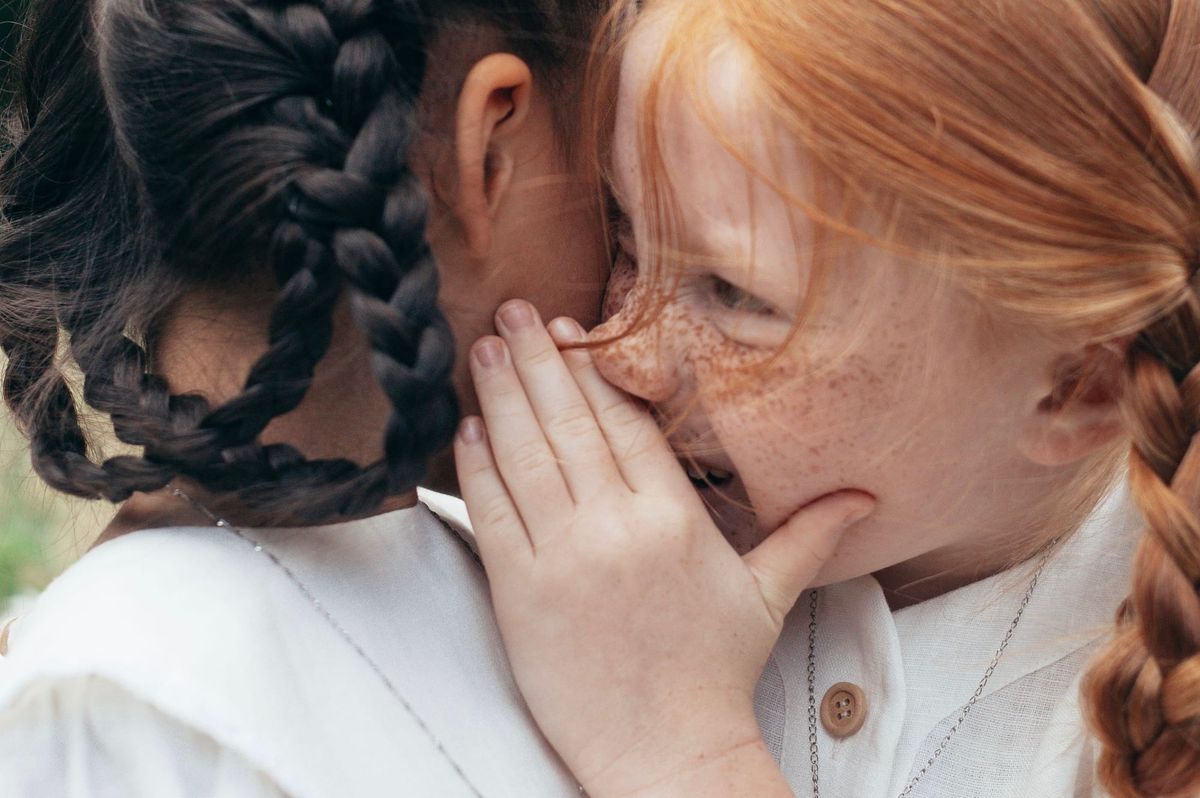
Children look to us for clues about what types of engagement and which relationships should be valued and about whether they are navigating their own social worlds correctly in our eyes. They need to know, through both our overt and our more subtle reactions, that every point of connection on the spectrum of our relationships matters from the biggest, boldest, community celebrations to the most tentative whispers between friends to the imagination of others’ lives through story.
And, as adults, I think we sometimes need to be reminded of this in our own lives as well. A dimension of our potential impact in the world—and of our children’s belief in their own capacity for impact—has to do with understanding and valuing the form of connection that we, and they, are most adept at nurturing and that brings us, and them, the most joy. This is what allows us all to identify where our own voice will be most meaningful and the most sustainable.
We need people who are skilled at cultivating magnetic, large-scale experiences that bring communities together in big ways, whether in moments of joy or in moments of grief and fear. And we also need people who are skilled at establishing deep relational trust in the most personal contexts.
I wonder: What types of connective experiences do you gravitate to? What value do you assign to different manifestations of community at its most personal and its most expansive? How might you be communicating these values to the children in your life? And how were these values communicated to you?
Wishing you a wide and compelling diversity of connection and care,
Alicia
P.S. Notes on Hope primarily finds new readers when you share these notes with your own communities. It's always easier to hold onto hope when we're not doing it alone. 💚
A few things I found helpful and hopeful this week…
- The other champions at the Knicks parade: NYC public school student basketball players
- Dane County, Wisconsin returns 165 acres to the Ho-Chunk Nation
- The Geometry of Opening: Looking closely at common things (in this case flowers!)
- The Prairieland Sentences Are a National Emergency
- Learning Under Occupation: Community Resilience in Twin Cities Schools