No Grown-Ups Allowed
Resisting the urge to surveil, document, and consume every moment of children’s lives

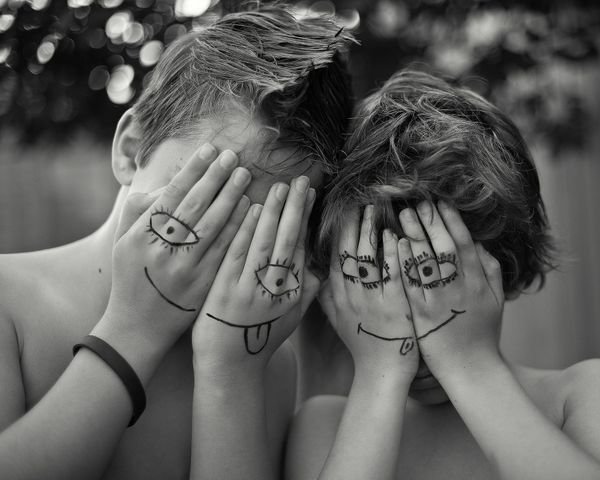
I’m Nobody! Who are you?
Are you – Nobody – too?
Then there’s a pair of us!
Don’t tell! they’d advertise – you know!
How dreary – to be – Somebody!
How public – like a Frog –
To tell one’s name – the livelong June –
To an admiring Bog!
~Emily Dickinson
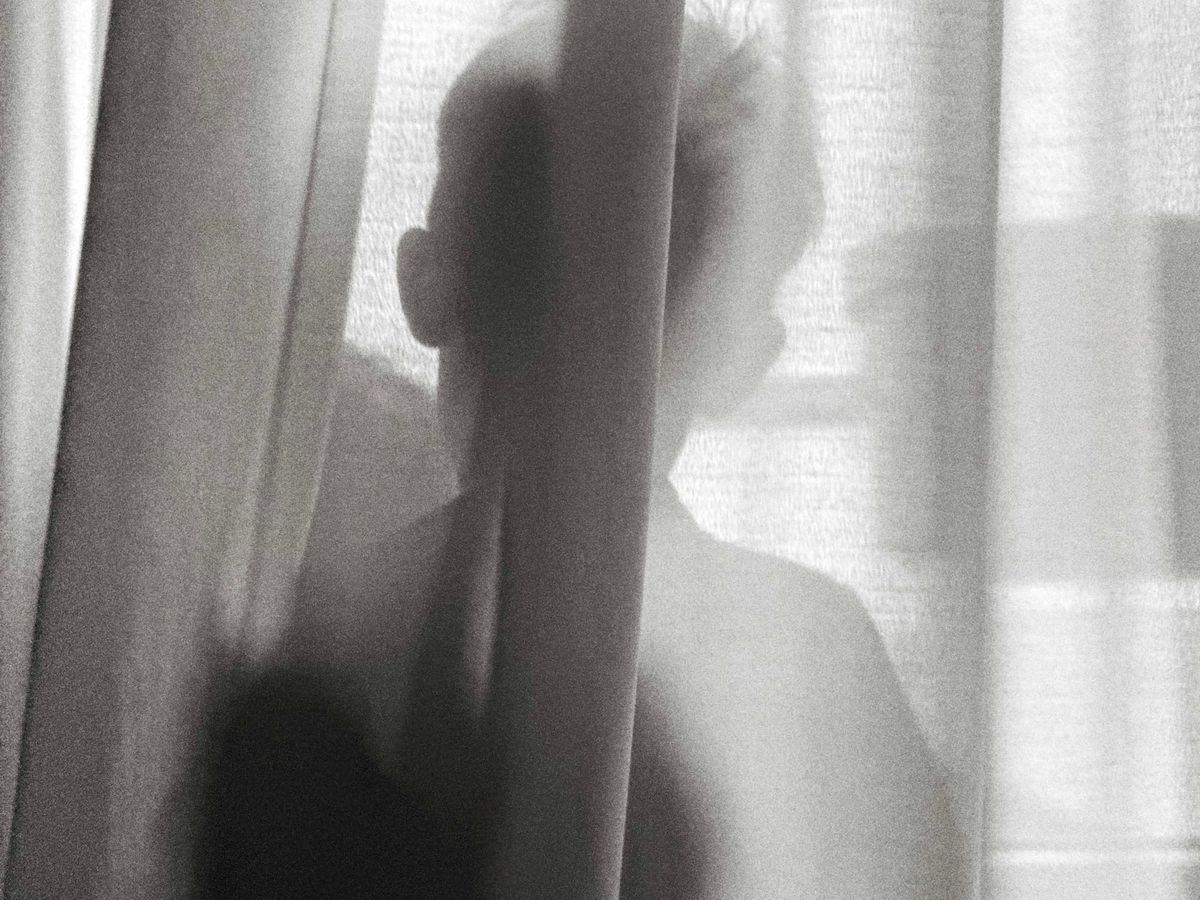
When I was a child, there was a row of bushes along one side of our school playground that created a perfect hideout. The branches arched in a way that carved a child-sized space underneath, and there was a small gap in the foliage that only a very small body could easily duck through. A few children could fit inside at a time, and we would tuck ourselves beneath the leaves and out of the adult gaze, giggling at the deliciousness of becoming unseen. This was pretty much the whole game; there was something enticing and lush in the mere act of hiding.
As a teacher, I’ve spent many hours watching over playground games. Despite all the seemingly exciting loops and ladders of playground structures, some of the most coveted spots are always the nooks kids discover that only they will fit inside, crawling under climbing towers and beneath bridges or wriggling behind wood-planked walls. Every playground tunnel meant to be a passageway inevitably becomes a hideout. Of course, sometimes these secret spots can become sites for exclusion, or for testing the limits of games adults might put a stop to. But, more often, the act of escaping the adult gaze is the entire appeal. There’s a reason invisibility is considered a super power—the ability to hide can be empowering, especially when you are usually intensely observed, as children almost always are.
For as long as children have been building forts and tree houses, the experience of creating spaces adults can’t govern or even witness has been integral to childhood. Surely, it’s one of the many ways children try out independence, experimenting with the reach of adult rules and testing the limits of their own comfort with separation—an extension of the peek-a-boo games that are, perhaps, the infant precursor to childhood’s secret forts. But I think there is also something inherently pleasurable about being un-witnessed, particularly for children who are otherwise constantly under a watchful eye, their every action potentially available to adult evaluation and imprinted on adult memory.
Most of us can probably conjure at least one recollection from our own childhood of the visceral rush of liberation that infused the air around us when we discovered a hidden nook and ducked out of the reach of adult attention, either to sit in the quiet of our own thoughts or to huddle, shoulder to shoulder, with a giggling co-conspirator.

Early childhood educators have worried, since the arrival of camera phones, about the extent to which children’s relationships are increasingly mediated by devices. These concerns are typically framed around how relationships change when they are physically intercepted by a screen—how face-to-face contact, which we know is central to the development of empathy, language, and so many other social and cognitive milestones, is limited when a device interrupts authentic, direct, reciprocal attention. In developmental research, these crucial exchanges are referred to as “serve and return” experiences. They are the entry into learning the rhythms and rewards of engaged conversation, even before language emerges. A baby smiles and we smile back. They babble at us and we respond with a question, which elicits more babbling. We make a silly face, they giggle, and we can’t help but make the face again to prompt more giggles. The moment we lift our phone, the intimacy of these experiences becomes a little diluted, if not fully interrupted.
It’s worth paying attention to the way the ease of memorializing every exchange within our relationships has the power to distort and filter those very relationships, particularly when it comes to our children, who are just learning how to elicit and sustain social connection. But I also wonder about the moments that are not intended for adults at all. Our ability to easily document every aspect of life allows us to extend the reach of our witnessing, and to make anything and everything potentially permanent and public, including experiences that are not truly our own.
Children’s play and their budding conversations with peers are often delightful. I’ve spent many hours sitting near children as they played, in the classroom and at home. Their ideas, exclamations, and idle chatter can range from the hilarious to the absurd. And it can be incredibly tempting to try to preserve all these utterances, whether because they tug at our hearts, fascinate us, or simply make us laugh.
The early years of children's lives are also inherently fleeting. So, it’s easy, especially as a parent, to feel compelled to bottle every moment. Parenting involves being in an intimate relationship with a rapidly transforming individual, and it is often uniquely exciting to observe their constant metamorphosis. But this also involves routine losses. As soon as we’ve gotten to know one iteration of a child, that version slips into the shadows and we are greeted by someone new. They may always harbor traces of their earlier form. We can still glimpse reminders of our toddlers passing across their older faces, but they will never fully be the child they were last year, or even last month, again. This feeling of constant change and loss makes it enticing to freeze and file away every version before it vanishes.
It’s not wrong to want to preserve these memories, and most of the time I don’t think it does any harm. In fact, children often enjoy looking back at younger versions of themselves as much as we do, fascinated by their own past. Documenting family memories is also important to archiving and passing on our personal histories.
I’m glad my teen son can revisit photos of himself with his great grandfather, long after his toddler memories of that relationship have surely faded. I’m glad I have photos of earlier versions of him to look back at and videos where his younger voice reaches through time. There's a recording of my son laughing that distinct belly laugh that only babies possess, and a string of videos of him talking to The Muppets on a play-phone that transports me instantly back to his round-cheeked two-year-old self. There’s one of him pretending to pilot a ferry boat on the playground in which he calls out, “Then I will come back to you!” just before dashing off. My heart swells every time I listen to it. I return to these often. They are like doses of pure oxytocin.
All of the photos and videos I’ve just alluded to were taken with my son’s awareness. As much as I think it’s important to be mindful of the amount of time a device is propped between our eyes and our child’s, there is also a degree of mutual understanding in this form of documentation that’s important. There is nothing covert about it, which provides an element of acknowledged consent. I’ve seen children push a phone away or simply stop whatever they were saying or doing that prompted an adult's desire to record when a phone emerges. Seeing the device at least allows a child to decide if they will participate in being documented.
It can be tempting, though, in our zeal to hold onto this finite period in children’s lives, and sometimes simply out of delight at their small voices and imaginative exclamations, to extend the reach of our documentation until it becomes more all-encompassing and either conveys a need for children to be in perpetual performance mode or grows more stealthy, circumventing their awareness. When nearly everything can become a recording tool, why not record everything?
When it comes to adult contexts, the idea of constantly recording each other seems invasive. There’s a reason smart glasses have prompted outcry, and in more intimate relationships a breach of consent through covert recording can be felt as a betrayal of trust. Imagine finding out that your spouse, for example, was recording you without your knowledge. Yet with children, we often blur these boundaries. Though parents are increasingly protective of others recording their children or making their images public, these limits often dissolve when it comes to our own recordings of our own children. Beginning in their earliest days, with video monitors hovering over their crib, it is nearly impossible for children to escape our gaze when our gaze can be everywhere all the time.
Recently, a tech CEO shared that he had recorded a lengthy pre-bedtime conversation between his toddler daughter and her cousin, during their first sleepover, by secretly placing microphones in her bedroom. He then broke the recording into segments, generated a track list, and shared it all with his extended family, which he said was met with “pure joy from everyone.” I have no doubt that the recordings were adorable and that his family loved them. And perhaps this seems harmless, given that the recordings themselves were only shared within his family. Nonetheless, wouldn’t we find it alarming if someone did the same to us as adults, even if the recording was not made public? How much older would his daughter have to be before recording her slumber party conversation seemed, not merely excessive, but a little creepy? Clearly he understood that knowing microphones were present would change the nature of the children’s conversation, because he explicitly described his set-up as “sneaking a mic in.”
Why is it that we don’t see children as entitled to privacy, even when we know that capturing their authentic interaction requires stealth, a clear indicator that we're aware being observed and documented would make even a very young child feel more self-conscious and inhibited? Our sense of easy entitlement to our children's images and voices reveals the extent to which kids, especially young kids, are often treated more as property, or as extensions of us, than as autonomous individuals, deserving the same level of respect and agency we take for granted in most other relationships. Just because a recording isn't broadcast on social media doesn't make us inherently entitled to possess someone else's image and words.
Now, return to that childhood hideout from the shadows of your own memory. Imagine an adult recording your conversations with friends when you thought you were alone. Imagine microphones hiding in your tree house, your pillow fort, or tucked under the wooden slats of the jungle gym. Imagine cameras in your bedroom, as you played with your friends and shared silly jokes, secret handshakes, or invented goofy dances. Looking back, is there any age when you would not have felt at least a little unnerved or reluctant to be your full self, if you knew that every utterance might have an audience? And what if you didn’t know and only found out about the microphones and cameras later?
We know that the feeling of being constantly recorded is impacting kids, particularly when this is combined with the ease and range of sharing that social media invites. There has been a spate of articles observing that teens are no longer dancing at parties and school dances out of a fear that any embarrassing moment will be captured on video and made widely public. While the potential for unwanted viral attention on social media is certainly integral to this fear, I suspect that an entire childhood of having nearly every move and every word documented is also factoring into their heightened reluctance to take risks. When every moment is observed and has the potential to be made public, how could any of us feel truly at ease with our imperfections? Resilience and bravery are built, first, through lots of practice taking low-stakes risks and tolerating small doses of embarrassment within the safe limits of trusted bonds, knowing that our stumbles won't be memorialized forever.
Even if hidden mics at a sleepover feel like a bridge too far, though, I wonder how removed this choice really is from the more routine ways we all document our children’s lives. If we reflexively lift our phones to record nearly every phrase and gesture, how do we know when we’ve gone too far? And how old does a child have to be before we see them as entitled to step away from our observing eye to form memories that are theirs alone? At what age do we see children as having the right to choose the freedom of escaping our gaze, even for just a few moments?
I don’t pretend to have total clarity on where all these lines are myself. We live in strangely public times. But I can tell you, from years of teaching preschool, that even very young children crave privacy. As enviably unselfconscious as children may seem, they are acutely aware of our eyes on them, and certainly of our cameras.
But I wonder if we got into the habit of conjuring our own memories of slipping behind a hedgerow, escaping into a tree house, or hovering under blankets with a flashlight—or even of simply playing and talking freely with a friend in our own bedroom or backyard, knowing our play and our words belonged only to us—whether we might be a little more likely to pause when we’re tempted to hit record on our children's lives?
Wishing you the pleasures of solitude and the grace to offer it to others,
Alicia
A few things I found helpful and hopeful this week…
- What do you tell your thirteen-year-old when you lose by Garrett Bucks
- To Hell with It by Caleb Gale
- Beaver dams helping boost drought resilience
- Why bravery and heartbreak are essential to organizing
- “We Live Inside the Sun.” Who Studies the Universe Changes How We See the Universe by Steven W. Thrasher