Holding onto Possibility
On losing leaders, stepping into the unknown, and remembering our earliest lessons

“But do not let your ignorance
Of my spirit's whereabouts dismay
You, or overwhelm your thoughts.
Be careful not to say
Anything too final. Whatever
Is unsure is possible, and life is bigger
Than flesh. Beyond reach of thought
Let imagination figure
Your hope.”
~Wendell Berry
We’ve lost so many of our leaders and bards in recent weeks. It has been, in some ways, a summer of reckoning with cultural loss and with how we move forward through uncertainty without those who have long lit the way forward. In the past, I’ve sometimes written my way through these kinds of public losses individually (Andrea Gibson, Jane Goodall, and most recently Glenn Hansard). But it’s hard to even know where to begin after this latest string of goodbyes. When Peter Cullen, whom my son’s long been a fan of, died on August 26th, following Sam Neil in July, and Tim Curry and Dolly Parton just a few days prior in August, my son called out from his bedroom, “Can someone please check on David Attenborough?!” That was a week and a half ago, and we still seem to be holding onto a little more time with our centenarian Lorax, but we’ve since also lost the jazz singer, Cassandra Wilson, the poet, Wendell Berry, and the feminist trailblazer, Gloria Steinem. All of these larger than life passings, coming in such quick succession, feels like some sort of unbidden cosmic changing of the guard.
As adults, no matter how old we are, I think these large, cultural losses always feel a little like the grown-ups are letting go of our hands. Many years in preschool classrooms have taught me that we never stop navigating separation. There’s a particular feeling of loneliness and unmooring that can wash over us when those we’ve trusted to show us the way for as long as we can remember seem to disappear. Just like a young child, we can be surrounded by care and still feel that we are somehow suddenly very small and alone, as though the world has grown exponentially bigger and more uncertain while we weren’t looking.
Part of this feeling of loneliness is the simple, universal tenor of grief. Even the loss of those we don’t know personally can leave us in a state of mourning. The words, art, and actions of those who have shaped us as individuals, have made us feel connected to a bigger, less isolated experience, or have helped to clear or clarify our path, keep us company in specific and powerful ways. Letting go of these figures often feels lonely because having their voices in the world made us less so.
In addition to this very personal dimension of grief, there can also be a feeling of deep anxiety, as we realize that the weight they carried ahead of us as leaders or as interpreters must now be transferred to our own shoulders. We always held an individual responsibility for shaping the future, but that task feels magnified when those we’ve come to expect to forge the way are no longer there. Their words and work, of course, remain with us. But it’s not the same as having guides and meaning makers shepherding us forward in real time. We can be grateful for the instructions they’ve left behind, while still feeling the breach that their absence creates.

The day after the 2016 election, in an interview on NPR, Gloria Steinem said, “This was a vote against the future, but the future is going to happen anyway.” Nearly a decade later, it may feel as though that statement was either wrong or darker than we understood it to be at the time. So much has unraveled. But to take that view would be to forget that she was already 82 in 2016 and had been fighting for change for more than five decades. The steadfast belief that progress remains possible in the face of seismic loss is not one that comes from short-term vision, but from an earned understanding that the path toward greater freedom is never easy, quick, or complete; it always remains in our hands to choose to keep working toward the future we hope for, even when it may feel as though we are traveling back in time instead, and even when we experience losses that we’re not sure how to move forward from.
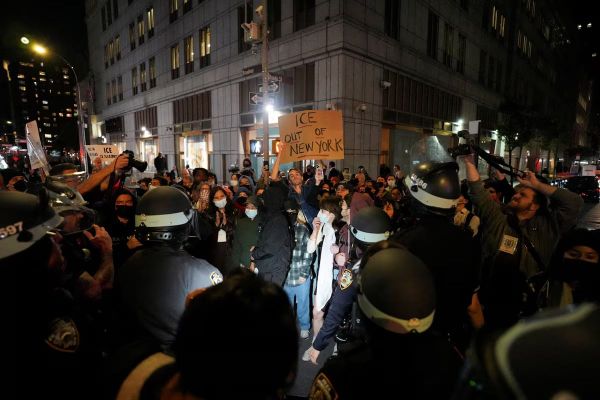
A few months after she said this, I carried Steinem's words about the future on the sign I brought to the Women’s March in January of 2017. That day feels very far away now and, for many, I think the memory of it also feels weighted down by the shadow of naivety that filled the crowds with buoyancy at the time. Experienced organizers, surely including people like Gloria Steinem herself, always knew that one day of raised voices doesn’t make a movement or topple oppressive power, but that also doesn’t make any one day unimportant to planting the seeds for what’s ahead. Those new to a fight often think in historical landmarks instead of in long, fraught journeys. But gaining experience and learning to expect setbacks isn’t the same as giving into despair. Declaring that the future would happen anyway wasn’t a magic spell or a manifestation or even a statement of inevitability; it was an invitation to those who hadn't been part of the work yet and a commitment to keep going for those who had.
On a personal and very micro level, my own life was running on a parallel track with the political world in 2017 in a way that felt so direct it was hard to explain at the time without laughing a gallows humor kind of laugh. Just four days before the Women’s March, my divorce had been finalized, dotting a profoundly frightening period in my life with the impression of a punctuation mark that I already understood would be anything but final. I knew that the reality of my day-to-day experience and the fears that I continued to carry, individually and as a parent, were anything but over. I had enough experience of both the relational and the systemic variables at play by then to know that, sometimes, paper does not offer meaningful protection or safety. So, on that January day in particular, the idea that the future would happen anyway wasn’t just a political platitude or the promise of a moral arch. It was a practical reminder to myself that, even when our circumstances feel threatening and dark, it’s still possible to believe that things can change and that we can move toward something different.
This is still what those words mean to me today, and I’ve been thinking about them in the wake of all these many losses. The idea that the future will happen anyway was never a promise made to us, but one we have to make to ourselves and to each other, over and over every day. The work of forging the future on both a personal and a collective level always belonged to all of us. The poetry, anthems, art, speeches, organizations, and communities that every one of the guides we’ve lost in recent weeks created will continue to make our own uncertainties feel a little less daunting. But the promise of the future was and continues to be ours to assert.
When we’re very young, the feeling of being suddenly untethered from a caregiver often creates a flash of panic. Babies and young children borrow courage and competency from those who care for them in a very physical way. A young child’s sense of security and belief in their own ability to function is deeply proximal. In these early years, children internalize a regulated nervous system and a willingness to try new things from the greater regulation and comfort of caring adults, close at hand. When my son was first learning to walk, he would often hold one of my fingers, even after he could take steps on his own. When balance is new, we reach for reassurance.
As children gain practice separating from their most trusted caregivers and forming new connections with an increasingly wide sphere of adults and peers, they learn two fundamental and intertwined lessons: they learn that they are still not alone and that they are more capable than they knew. As we continue to move through loss across a lifetime, we have to relearn these lessons again and again—to be reminded that we remain capable and competent, even when we can no longer grab onto those who have anchored us, and that we are not alone.
As the intimate and the political overlapped so obviously for me on a bright January day in 2017, emboldening words weren’t the only thing that took the edge off my fear, personally or more broadly. The group of fellow teachers I walked with that day did, too. Just as we were all accustomed to doing for children in the classroom, we reminded each other, through our shared company, that none of us was alone. In the years since, the fear hasn’t gone away. It’s ebbed and surged, both in my own personal life and for our collective well-being. But I’ve grown more capable of holding it without becoming subsumed. And I see this in communities as well. The networks of connection and active care feel deeper and wider, more capable of enduring and of working beyond any single day.
There will continue to be losses and grief—loss of progress we’d thought was solidly won, loss of leaders and luminaries who showed us the way for so long, and the personal losses that unmoor us in profound and intimate ways. But, as we move through these losses, it is always our job to remember, and to remind each other, that we are capable of continuing to put one foot in front of the other, that it is necessary and possible to learn from both the wisdom and the mistakes of the past, and that we are responsible for each other.
As children, we learned to let go of those who had held us most closely, to trust in our own stability, and to see an increasingly wide range of people as guides and partners in our learning, in our care, and in our work. As adults, we have to keep practicing and reinternalizing these lessons. But neither the need to keep learning and relearning nor the uncertainty of what lies ahead, as we pick up the work of those who went before, negates the potential of the future.
The future is going to happen anyway.
“Whatever
Is unsure is possible, and life is bigger
Than flesh. Beyond reach of thought
Let imagination figure
Your hope.”
Wishing you the courage, fortitude, and imagination to pick up the work of your heroes and carry it forward,
Alicia
A few things I found helpful and hopeful this week…
- Random Ants & Picture Books: W. Kamau Bell interviewed Mo Willems & Cher Willems and it is just the best! Do yourself a favor and listen to this conversation. It will make your day better, even if you're not a kid-lit person.
- Two pieces on a need to reassert play and exploration in children's lives: Have We Destroyed Childhood? and The Case for Letting High Schoolers Goof Off
- My Immigrant Students and Families Give More Than They Take
- Prison inmates donate more than $4,000 to pay children's school lunch debt - Yes, you read that right. This article is framed as a puff piece about a local prison initiative, but it should be read as an indictment of our social and financial choices.